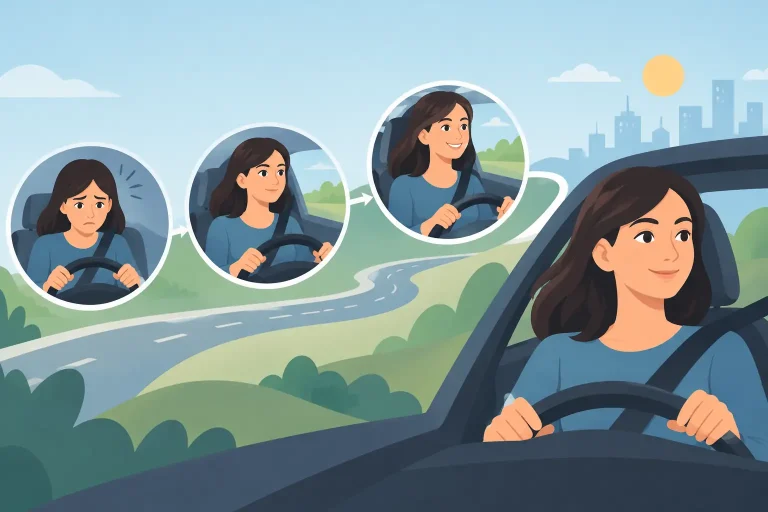
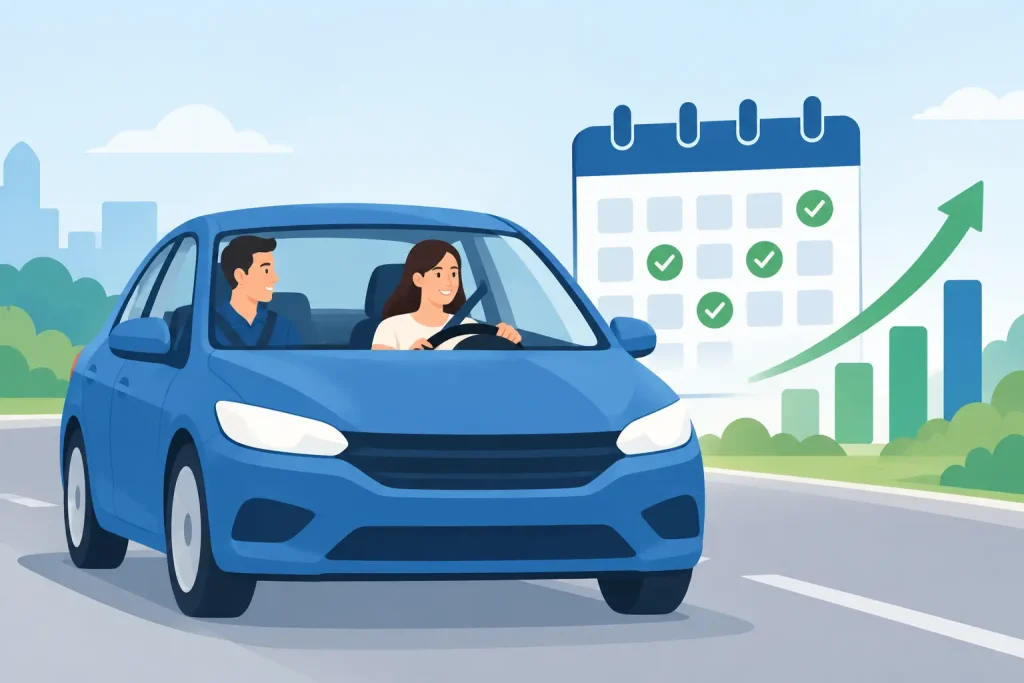
A learner who has one good lesson, then waits three weeks to drive again, often spends the first 15 minutes trying to remember steering control, mirror checks and road position. The right driving lesson frequency helps skills stay fresh, builds confidence gradually and gives you time to correct habits before they become harder to change.
There is no single schedule that suits every learner in Tarneit, Truganina, Werribee, Hoppers Crossing or Point Cook. Your experience, access to supervised practice, confidence level and test date all matter. What does stay consistent is this: regular, focused lessons usually produce safer progress than occasional long gaps between drives.
Driving lesson frequency: the practical answer
For most beginner learners, one professional lesson each week is a sensible starting point. It creates enough repetition to remember what you learned last time, without making the process feel overwhelming. It also gives you several days to practise the same skills with a qualified supervising driver, if you have access to one.
A weekly lesson allows your instructor to build skills in a logical order. You may begin with moving off smoothly, braking and steering, then progress to quiet streets, intersections, roundabouts, lane changes, parking and busier local roads. Each session can review what needs more work rather than starting from scratch.
Some learners benefit from two lessons a week for a short period. This can be helpful when you are close to a VicRoads practical driving test, returning to driving after a long break, or working through strong driving anxiety. More frequent lessons are not automatically better, though. You still need time to process feedback and practise calmly between sessions.
If weekly lessons are not practical for your budget or schedule, a fortnightly lesson can still work well. The key is to drive regularly between lessons. Without that practice, two weeks can feel like a long time and progress may slow down.
Why long gaps can make learning harder
Driving is a practical skill. You need to learn the sequence of checking mirrors, signalling, judging gaps, managing speed and responding to other road users until it becomes more natural. Reading about those skills helps, but it cannot replace time behind the wheel.
Long gaps can affect nervous learners most. It is common to feel comfortable at the end of one lesson, then anxious again after several weeks away from driving. Regular exposure helps make ordinary situations feel familiar: turning at a busy intersection, sharing the road with cyclists, entering a roundabout or parking near a shopping strip.
Frequent lessons also allow problems to be identified early. For example, a learner may be braking too late, drifting within the lane, missing head checks or approaching roundabouts too quickly. Addressing one or two points consistently is much easier than trying to fix several habits just before a test.
That said, learners should not feel pressured to book more lessons than they need. A good instructor will recommend a realistic plan based on your actual driving, not a one-size-fits-all package.
Match lesson length to your stage of learning
Lesson frequency works best when it is paired with the right lesson length. A 45-minute lesson can suit a learner who is practising regularly and wants to focus on one skill, such as parallel parking, lane changing or improving observation at intersections.
A 60-minute lesson gives more time to settle in, practise a wider range of conditions and receive clear feedback at the end. For many learners, this is a comfortable format for weekly driving instruction.
A 90-minute lesson can be useful for learners who live further from their preferred practice area, need more repetition or are preparing for a practical test. It gives time to cover residential streets, main roads, roundabouts and parking exercises without rushing. However, longer is not always best for a new or highly nervous learner. Concentration can drop when too much information is introduced at once.
At Victest Driving School, lesson length can be matched to your confidence, experience and goals, rather than treating every learner the same.
Make the time between lessons count
A professional lesson gives you expert feedback. Private practice helps turn that feedback into a habit. If possible, aim for one or two short supervised drives between lessons instead of waiting until your next session.
You do not need to attempt difficult roads immediately. A focused 30-minute drive around familiar local streets can be very valuable when it has a clear purpose. For example, you might practise smooth braking, safe left and right turns, correct mirror routines or holding a steady speed.
Before each practice drive, decide on one main focus. After the drive, write down what felt easier and what still caused hesitation. This gives you useful information to bring to your next lesson, and it prevents practice from becoming repetitive driving without improvement.
Useful areas to rotate through include:
- moving off, stopping and maintaining a safe following distance
- mirror checks, signalling and head checks before changing direction
- roundabouts, intersections and safe gap selection
- reverse parking, parallel parking and three-point turns
- driving in different weather, traffic and lighting conditions with an appropriate supervisor
Your logbook hours matter, but the quality of those hours matters too. A learner who practises attentively in varied conditions will usually develop better judgement than someone who repeats the same quiet route every time.
When to increase your lesson frequency
There are a few points in the learning process when extra lessons can be worthwhile. The first is when you are preparing to move from basic vehicle control to more complex traffic. Learners often need added support when they begin dealing with multi-lane roads, busy roundabouts, lane changes and unfamiliar areas.
Another is in the final weeks before your practical driving test. If your test is approaching and you are already driving safely and independently most of the time, one or two extra sessions can help polish the details. These may include pre-drive checks, speed management, observation, positioning, parking and following directions without losing concentration.
A mock test is particularly useful at this stage. It shows whether you can combine all your skills under test-like conditions, rather than performing each skill separately. It can also reduce uncertainty about what happens on the day, including settling into the car and managing nerves.
Do not increase your frequency simply because you made one mistake. Every learner has difficult lessons. Increase it when there is a clear reason: a test date, a significant confidence barrier, a long period away from driving or a skill that needs concentrated practice.
When a slower pace may be better
A slower schedule can be the right choice for adult beginners, learners managing work or family commitments, and people who become mentally tired after driving. In these cases, consistency matters more than intensity.
If you book lessons fortnightly, arrange a simple practice plan. Drive on the same day each week with a supervisor if you can, even for a short session. This keeps your confidence from dropping and means your paid lesson can focus on new skills rather than revising the basics.
International licence holders may also need a tailored approach. You may already have years of driving experience, but Victorian road rules, road markings, hook turns, tram awareness or test expectations may be different from what you know. A smaller number of targeted lessons can be more useful than a beginner-style schedule.
Signs your current schedule needs changing
Your lesson plan may need adjusting if you repeatedly spend time relearning the previous lesson, feel highly anxious before every drive, or cannot practise at all between sessions. You may also need more structured instruction if your supervising driver gives conflicting advice or avoids practising areas you find challenging.
On the other hand, you may be ready to reduce professional lesson frequency when you consistently make safe decisions, respond well to changing traffic conditions and can complete a drive with only minor reminders. Your instructor should be honest about that progress. The aim is not to keep you dependent on lessons. It is to help you become a safe, confident and responsible driver on your own.
The best schedule is one you can maintain calmly and consistently. Start with regular lessons, practise one skill at a time between sessions and adjust the pace as your confidence grows. Safe driving is built through steady repetition, clear feedback and the confidence to make good decisions when no instructor is sitting beside you.