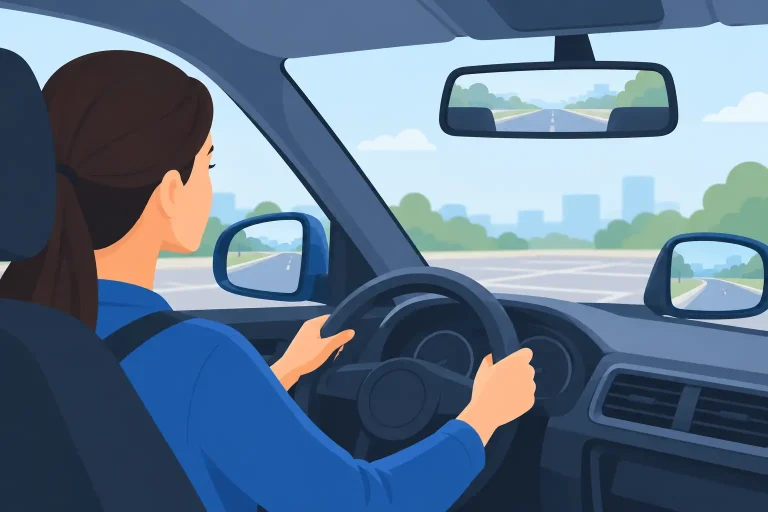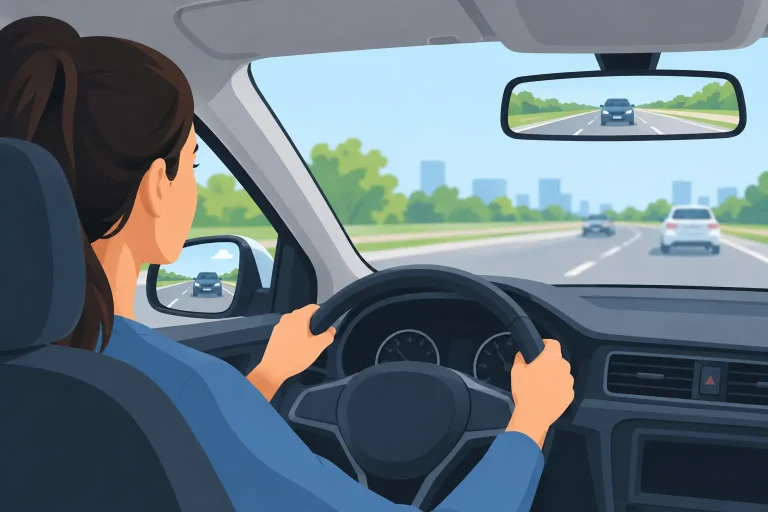
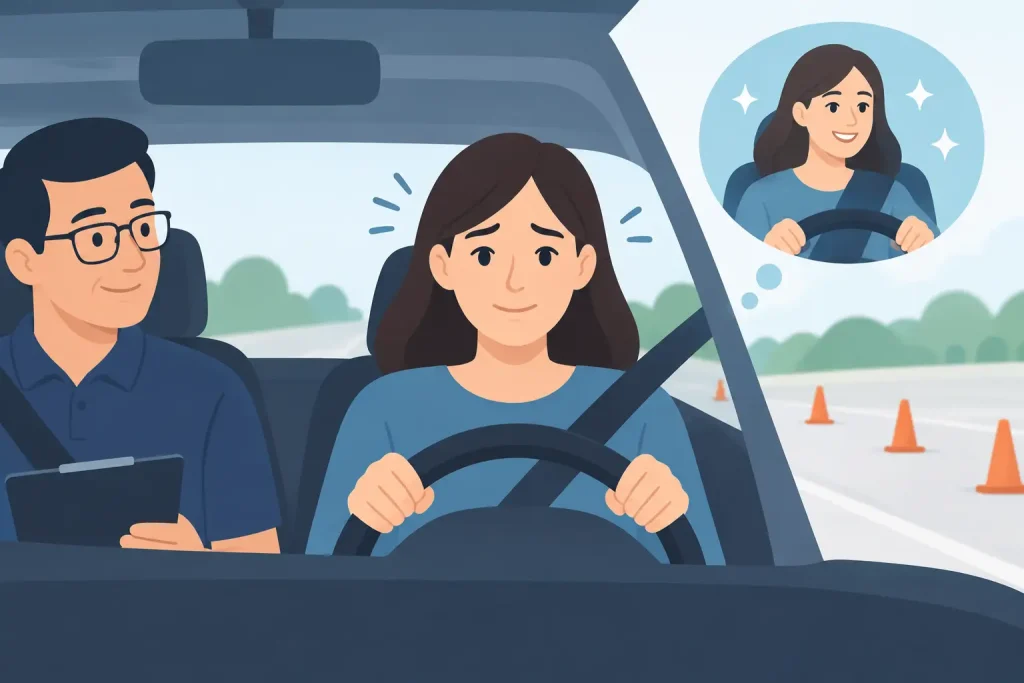
A shaky left foot at the brake, a racing mind at the first roundabout, forgetting a mirror check you have practised dozens of times – these are familiar test-day feelings. So, can nervous drivers pass tests? Absolutely. Nervousness does not mean you are unsafe or unprepared. It simply means the test matters to you. The goal is not to feel completely calm. It is to drive safely and make sound decisions even when you feel nervous.
For learners across Melbourne’s western suburbs, the practical driving test can feel like one short drive deciding everything. In reality, the assessor is looking for safe, consistent driving: good observation, appropriate speed, controlled steering and braking, sensible gap selection, and awareness of other road users. Those skills can still show up on a nervous day when they have been practised properly.
Can nervous drivers pass driving tests in Victoria?
Yes. Many people pass their VicRoads practical test while feeling anxious. Some are teenagers taking their first test, while others are adult beginners or international licence holders adjusting to Victorian road rules and local driving conditions. Confidence helps, but confidence is not a test requirement. Safe driving is.
The difference is preparation. A nervous learner who has built reliable routines is often in a stronger position than an overconfident learner who rushes decisions. When checking mirrors, signalling, scanning intersections and managing speed have become habits, you do not have to remember every step from scratch under pressure.
That said, nerves can affect performance if they cause you to freeze, rush, drive too slowly without reason, miss hazards or lose concentration after a small mistake. This is why test preparation should focus on both driving skills and how you respond when something does not go perfectly.
What assessors want to see
A driving test is not a search for a flawless driver. It is an assessment of whether you can operate the vehicle safely, independently and legally in normal traffic conditions. You may make a minor error and still continue driving well. What matters is the nature of the error and whether it creates a safety risk.
For example, taking a moment to position the car carefully before reverse parallel parking is usually better than hurrying and losing control. Waiting for a safe gap at a busy roundabout is better than forcing your way in because you are worried about holding up traffic. A calm, deliberate decision is a sign of judgement.
Common areas that need to be consistent include checking mirrors before changing speed or direction, performing head checks before moving across lanes or pulling away, maintaining a safe following distance, responding to give way signs, and selecting a speed that suits the road and conditions. In suburban areas such as Tarneit, Truganina, Werribee and Hoppers Crossing, learners also need to be alert to school zones, cyclists, parked cars, busy shopping areas and changing speed signs.
Build routines that work when you are anxious
Nerves make working memory less reliable. You may know the rules but struggle to recall them in the moment. Routines reduce that load. Instead of thinking, “What do I do now?”, you follow a sequence you have used repeatedly in lessons.
Before moving off, take a breath, check your mirrors, indicate if needed, complete a head check and move only when safe. Before turning, look well ahead, check mirrors, signal in good time, select a suitable position and speed, then check the intersection or crossing. The exact sequence will vary with the situation, but the principle stays the same: observe early and avoid rushing.
Practise commentary driving with your instructor or supervising driver. Quietly say what you can see and what you plan to do: “Pedestrian near the crossing, easing off,” or “Car parked ahead, checking mirrors before moving out.” It may feel awkward at first, but it teaches your eyes to scan ahead and helps you make decisions before the pressure point arrives.
Parking manoeuvres also become easier when broken into a repeatable process. Rather than memorising one set of landmarks, understand the space around the vehicle, move slowly, keep looking around, and correct early. The same applies to three-point turns and kerbside stops. Control and observation matter more than finishing quickly.
Practise the test conditions, not just the route
Knowing local roads can be helpful, particularly when you understand where traffic builds up or where speed limits change. But relying on a memorised test route can make nerves worse if the assessor takes you somewhere different. The stronger approach is to practise the types of situations you are likely to meet anywhere: roundabouts, lane changes, uncontrolled intersections, busy car parks, railway crossings, residential streets and main roads.
A mock test is especially valuable for nervous drivers because it makes the unfamiliar feel familiar. Your instructor can give directions with minimal coaching, observe your decisions, and explain what would be assessed after the drive. It can reveal habits that are easy to miss during a normal lesson, such as late mirror checks, hesitant lane positioning or braking too sharply.
Do more than one mock test if time allows. The first may feel uncomfortable because the format is new. The next one gives you a chance to apply feedback, which is where confidence starts becoming genuine.
How to manage nerves on test day
Test-day preparation begins before you sit in the driver’s seat. Get enough sleep where possible, eat something light, arrive with time to spare, and wear comfortable footwear that lets you feel the pedals properly. Last-minute cramming is rarely useful. A short warm-up drive focusing on smooth braking, observation and speed control is usually more productive.
Before the assessment, make sure the vehicle is suitable and familiar. Adjust your seat, mirrors and steering position before moving off. Know where the demister, indicators, windscreen wipers and headlights are. If you are using a driving school’s vehicle, complete a pre-drive check with your instructor so you are not distracted by small uncertainties.
During the test, do not try to guess whether you are passing. That thought pulls your attention away from the road. Focus only on the next safe task: the next intersection, the next mirror check, the next speed sign. If you believe you made a mistake, keep driving safely. Many learners become more unsettled by one imperfect moment than the moment itself.
It is also fine to take a brief pause before moving off or entering a gap, provided you are not obstructing traffic unnecessarily. One steady breath can prevent a rushed choice. You are allowed to think.
Turn feedback into confidence
The fastest way to improve is to be specific about what makes you nervous. “I am bad at driving” is too broad to fix. “I panic when changing lanes,” “I lose track of speed in 40 zones,” or “I am worried about reverse parallel parking” gives you a clear lesson goal.
A patient instructor can then practise that skill in stages. For lane changes, you might begin on a quieter road, repeat the mirror-signal-head-check routine, learn how to judge gaps, and then move to busier traffic when you are ready. For roundabouts, you can work on approach speed, observation, giving way and choosing safe gaps without feeling pushed to go too soon.
At Victest Driving School, one-on-one lessons are designed to give learners clear, practical feedback without adding pressure. The aim is not to create a driver who can repeat a route on command. It is to help you become safe enough to handle the roads around you with sound judgement.
When it may be better to postpone
Sometimes nervousness is manageable; sometimes it is overwhelming. If you are experiencing panic attacks, cannot concentrate, have not yet practised key skills independently, or are still making repeated safety-critical errors, more preparation may be the sensible choice. Delaying a test is not failure. It can protect your confidence and give you time to build the skills that will make the next booking more worthwhile.
On the other hand, waiting until you feel zero nerves can keep you stuck. Most learners never feel completely relaxed before their first test. If you can drive safely in a range of conditions, follow feedback and recover from small mistakes, you may be more ready than you think.
Your nerves are not a verdict on your ability. With steady practice, a familiar routine and support that suits your pace, they can become background noise while your safe driving takes the lead.