A quick glance in the rear-view mirror before you brake for a roundabout can prevent a surprise from the car behind you. On a VicRoads driving test, it also shows the assessor that you are aware of the traffic around you, not just the road ahead. The best mirror check routines are not about dramatically turning your head or staring at a mirror. They are calm, purposeful checks that become part of every decision you make.
For learner drivers in Melbourne’s western suburbs, mirror use matters on busy roads, quiet residential streets, school zones and multi-lane intersections alike. Traffic conditions can change quickly around Tarneit, Werribee, Hoppers Crossing and Point Cook. A good routine helps you respond early and drive with more confidence.
What a Good Mirror Check Actually Looks Like
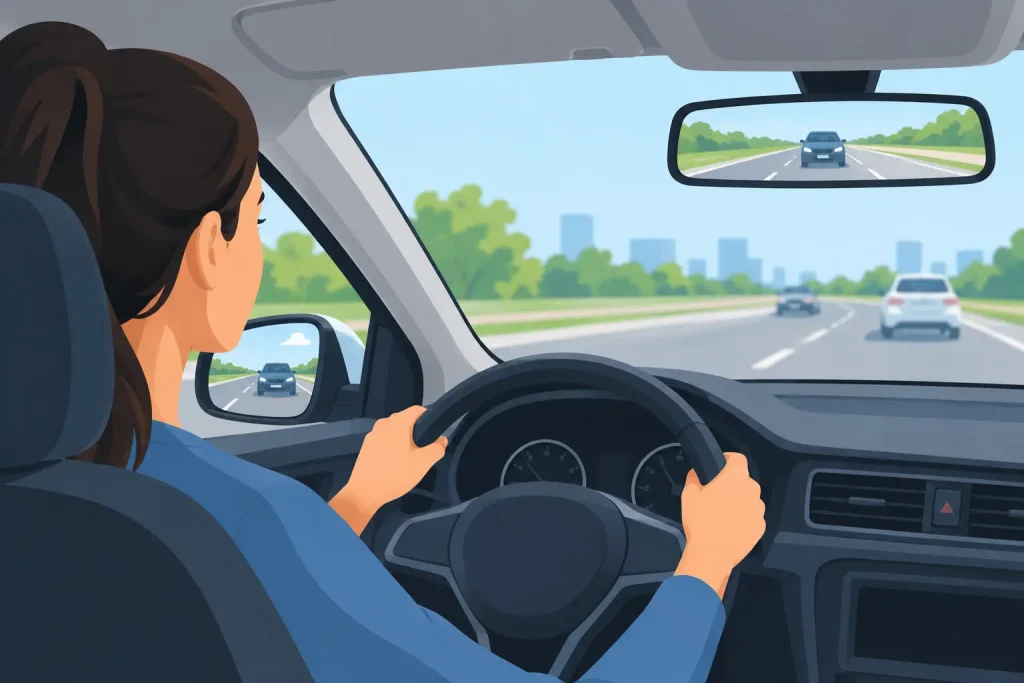
A mirror check should be brief enough that your attention stays mainly on the road ahead, but clear enough that you take in useful information. You are looking for vehicles behind you, cyclists, motorbikes, pedestrians near the road and any traffic that may be affected by what you are about to do.
Your inside mirror gives the clearest view directly behind your car. Your side mirrors show vehicles in adjacent lanes and traffic approaching from behind at an angle. They do not show everything, which is why a head check is needed before changing lanes, moving away from the kerb or entering traffic from a parked position.
The key is timing. Check mirrors before you act, not while you are already turning the steering wheel, braking hard or moving sideways. This gives you time to adjust your plan if somebody is closer than expected.
Best Mirror Check Routines for Everyday Driving
The most useful routine is simple: mirrors before speed changes, mirrors before direction changes, and mirrors before moving sideways. Once this becomes automatic, you will not need to recite it in your head during a driving test.
Before slowing or stopping
Check your inside mirror before braking noticeably. This includes slowing for a red light, roundabout, pedestrian crossing, speed hump, parked vehicles or a turn. You need to know whether a vehicle behind is following too closely so you can brake smoothly and early rather than suddenly.
For example, if traffic is building near a shopping strip or school crossing, look in the centre mirror first, ease off the accelerator, then brake progressively. If the vehicle behind is close, give yourself extra stopping distance and avoid sharp braking where possible.
You do not need to make a large, obvious mirror movement every time you gently ease off the accelerator. The check should match the situation. The bigger the speed change, the more important the observation.
Before turning left or right
Before turning, check the centre mirror, signal in good time, then check the relevant side mirror. For a left turn, the left mirror is particularly important because a cyclist, e-scooter rider or motorbike may be travelling alongside or approaching from behind.
On a busy Melbourne road, do not assume that signalling alone makes the space safe. Your indicator communicates your intention, but it does not give you right of way. Keep the turn smooth and stay alert for road users who may not stop or slow down as expected.
When turning right, your mirror check helps you understand the traffic behind before you reduce speed. Keep your focus ahead as you position the car and wait for a safe gap through oncoming traffic. Mirrors support the decision – they should never distract you from the hazards in front.
Before changing lanes
Lane changes require the fullest observation routine. Start with the centre mirror to understand the traffic behind, then check the side mirror on the side you intend to move towards. Signal, complete a quick head check over the appropriate shoulder, and move only when the lane is genuinely clear.
The head check is essential because another vehicle can sit in the blind spot beside your rear door or rear quarter. A side mirror may not reveal it. This applies whether you are moving into a faster lane, leaving a bus lane, avoiding a parked car or preparing for a turn.
Avoid drifting while you check. Keep a steady steering position, look ahead between observations, and make one clean lane movement when it is safe. If there is no safe gap, remain in your lane and wait. Missing one turn is safer than forcing a lane change.
Before moving off from the kerb
Moving away from the kerb is a common test situation because it brings several hazards together. Check the centre mirror, signal, check the side mirror, then complete a head check in the direction you will move. Look for approaching cars, cyclists filtering along the left, pedestrians stepping off the footpath and vehicles reversing nearby.
If a vehicle is approaching and you are unsure whether you have enough space, wait. There is no benefit in rushing to move off. Assessors want to see good judgement, and other drivers will understand a short pause far better than an unsafe manoeuvre.
Before reversing and parking
Mirrors help when reversing, but they are only part of the picture. For reverse parallel parking, angle parking or a three-point turn, you must use direct observation as well. Turn and look through the rear window where appropriate, check around the vehicle, and scan for pedestrians or children who could enter the area.
Your mirrors are useful for judging the car’s position relative to the kerb, line markings and parked cars. However, do not become fixated on them. A mirror cannot replace a proper scan of the space you are reversing into.
How Often Should You Check Your Mirrors?
There is no useful rule that says you must look in a mirror every exact number of seconds. Driving is not a stopwatch exercise. On a clear, straight road with stable traffic, regular brief checks of the centre mirror help you maintain awareness. In heavier traffic, at intersections or around hazards, you may need to check more often.
The better question is: what am I about to do, and who could be affected? If you plan to slow down, turn, change lanes, pull over or move off, check first. If a car behind has been tailgating, keep a closer eye on it. If you are travelling beside a bike lane or through a busy car park, give extra attention to the relevant side mirror and surrounding area.
During a driving test, natural mirror checks are easier for an assessor to recognise if you move your eyes first and make a small, normal head movement. Do not overdo it. Exaggerated checks can pull your attention away from the road and make your driving look less controlled.
Set Your Mirrors Before You Start Driving
Even excellent routines will not work well if the mirrors are poorly adjusted. Before moving off, set the inside mirror so you can see the full rear window without moving your body. Adjust each side mirror to show a small amount of your own car and a wide view of the lane beside you.
Check your seating position first. Sit comfortably with your back supported, hands able to reach the steering wheel with a slight bend in your arms, and feet able to operate the pedals without stretching. If you adjust the seat after setting the mirrors, you may need to adjust the mirrors again.
This pre-drive habit is especially valuable if you are using a family car, a friend’s vehicle or a driving school car. Never assume the previous driver’s mirror positions will suit you.
Common Mirror Check Mistakes Learners Can Fix
One common mistake is checking a mirror too late. A learner may begin braking, then look behind. By then, there is less time to respond to a tailgating vehicle. Build the mirror check into the start of the action instead.
Another mistake is looking only at the mirror and forgetting the road ahead. Your primary focus remains where the car is travelling. Mirror checks should be quick snapshots, followed by your eyes returning forward.
Some learners also confuse a side-mirror check with a head check. They are different observations with different purposes. Side mirrors help you monitor nearby lanes, while a head check covers the blind spot. When moving sideways, use both.
Finally, avoid checking mirrors simply because you think the assessor expects it. A routine has real value only when it helps you make safer decisions. If you understand why you are checking, the habit becomes more natural and much less stressful.
Practise the Routine Until It Feels Calm
Start on quieter local streets where you can focus on the sequence without heavy traffic pressure. Say the action quietly in your mind at first: mirror, signal, position, speed, look. As your confidence grows, the checks will become automatic and your driving will feel smoother.
A qualified instructor can spot whether you are missing checks, checking too late or spending too long looking away from the road. At Victest Driving School, lessons focus on building these practical habits in real traffic conditions, not just memorising a test routine.
The aim is not to make every mirror glance perfect. It is to become the driver who notices what is happening around the car early enough to make calm, safe choices – on test day and every day after you pass.