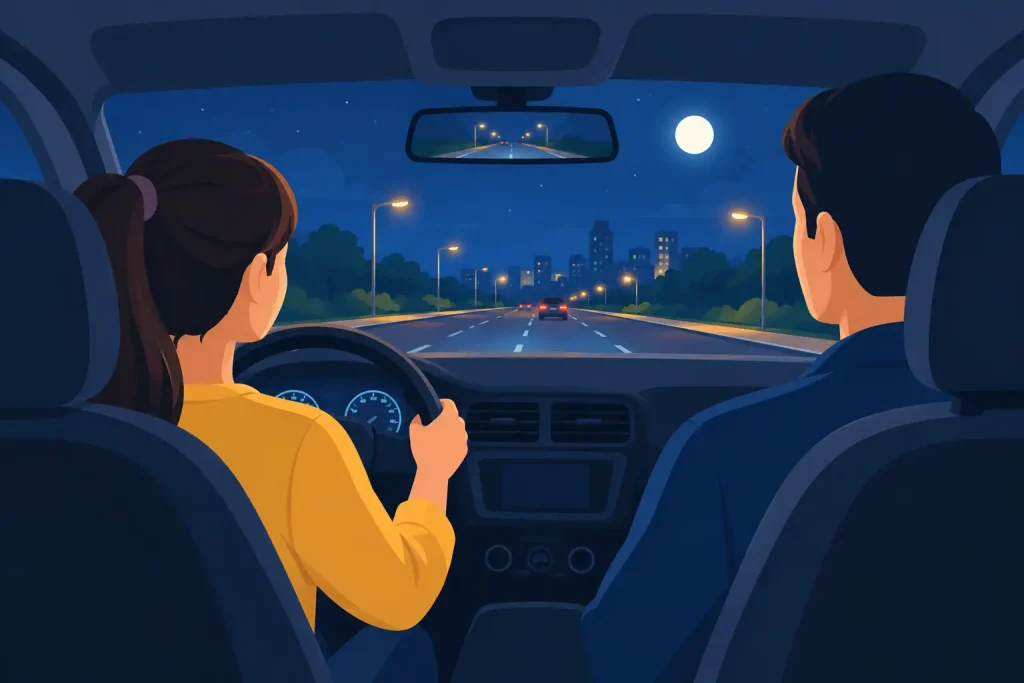
A familiar street can feel completely different after dark. Kerbs disappear into shadow, headlights can make it harder to judge distance, and pedestrians may not be visible until the last moment. Night driving for learners is not about being fearless. It is about slowing the process down, reading the road earlier and building calm habits that still work when visibility is reduced.
For learners in Melbourne’s western suburbs, evening driving also brings practical challenges: busy shopping precincts, changing speed zones, wet roads, roundabouts and traffic heading home from work. With the right preparation and supervised practice, night driving becomes a valuable part of becoming a safe, independent driver.
Why night driving for learners feels harder
At night, your eyes receive less information. Road markings, parked cars, cyclists, turn-offs and hazards are harder to identify, especially on streets without strong lighting. Your headlight beam shows only a limited distance ahead, so the time available to react is shorter than it is in daylight.
Glare is another common challenge. High beams from oncoming vehicles, bright LED headlights, reflections from wet bitumen and illuminated signs can all affect your vision. A learner who is comfortable during the day may suddenly feel tense at night because they are working harder to see, steer, check mirrors and make decisions at the same time.
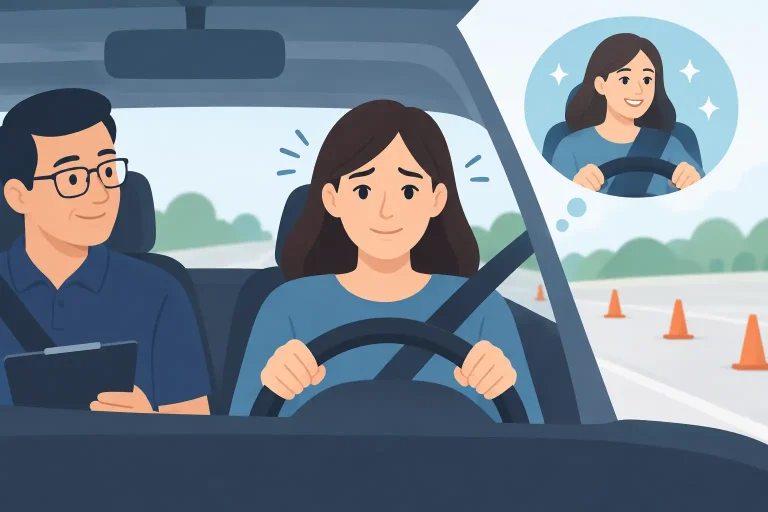
That feeling is normal. The answer is not to avoid driving after dark forever. It is to begin in conditions that match your current ability, then increase the difficulty gradually with a patient supervising driver or qualified instructor beside you.
Start with the right conditions
Your first night drives should be planned, not rushed. Choose a dry evening, a route you already know and roads with reasonable street lighting. Quiet residential streets around Tarneit, Truganina, Werribee or Hoppers Crossing can be a useful starting point before you progress to busier main roads, multi-lane traffic and unfamiliar routes.
Begin after sunset but before it is very late, when you are less likely to be tired. Keep the drive short. Twenty to thirty minutes of focused practice can be more useful than an hour of driving when you are overwhelmed or fatigued.
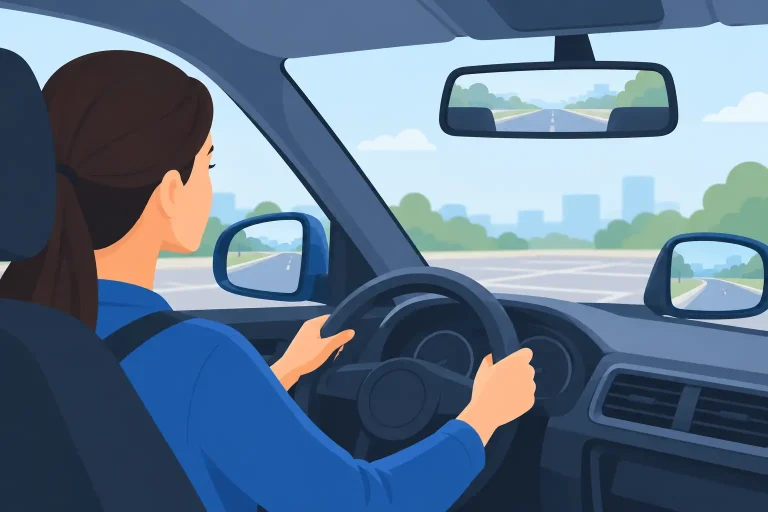
Before moving off, take a moment to adjust the driver’s seat, steering wheel and mirrors. Clean the windscreen inside and out if needed. Smears, dust and condensation create extra glare at night, particularly when headlights shine towards you. Check that all lights are working, including headlights, brake lights, indicators and number plate lights. Make sure you know where the demister, wipers and fog light controls are before you need them.
Use your headlights properly
Headlights are not only for helping you see. They help other road users see you. In Victoria, you must use headlights between sunset and sunrise and whenever visibility is poor. Do not wait until the road feels completely dark.
Low beam is the normal setting when other traffic is nearby. High beam can improve visibility on dark, open roads, but it must be dipped early enough not to dazzle oncoming drivers or drivers ahead of you. If you are unsure, use low beam. Being able to see slightly farther is never worth affecting another driver’s vision.
When an oncoming vehicle’s lights are bright, do not stare directly at them. Keep your eyes moving and use the left edge of your lane or the road markings as a guide, while maintaining awareness of what is ahead. Avoid looking down for too long. Your focus should remain well ahead, not fixed directly in front of the bonnet.
Leave more space and reduce your speed
The posted speed limit is not always the safe speed. At night, you may need to drive below the limit when the road is wet, lighting is poor, traffic is heavy or you cannot see far enough ahead. This is not holding up traffic. It is making a responsible decision based on the conditions.
Increase your following distance behind the vehicle ahead. Their brake lights may be the first sign that traffic is slowing, but you still need enough room to respond smoothly. A bigger gap gives you more time to brake progressively rather than suddenly, which is especially important on wet roads.
Approach intersections, roundabouts and pedestrian crossings with extra care. A person in dark clothing, a cyclist without strong lights or a parked car pulling out can be difficult to see. Scan further ahead, check side streets and expect that a hazard may appear from the darker parts of the road.
Keep your observations active
Night driving can encourage learners to look only at the illuminated area directly ahead. This narrows your awareness and makes hazards feel as though they appear suddenly. Instead, keep up your normal observation routine: look ahead, check mirrors regularly, scan side areas and check blind spots before changing position or lanes.
At intersections, look carefully for vehicles with dim headlights, motorcycles and pedestrians. At roundabouts, reduce speed early and make sure you have identified the lane, signs and traffic movement before entering. If you miss a turn or feel uncertain, continue safely and find a suitable place to turn around. Last-second lane changes are risky at any time, and even more so after dark.
A useful habit is to talk through what you can see while practising. You might say, “Car parked on the left, pedestrian near the crossing, brake lights ahead, road bends right.” This helps a learner develop active scanning rather than simply reacting when something is close.
Watch for fatigue and distractions
Tiredness can affect judgement, concentration and reaction time. This matters for all drivers, but it can be particularly challenging for learners who are still building automatic control of the vehicle. If you are yawning, losing focus, missing signs or feeling stressed, stop practising when it is safe to do so.
Keep your mobile out of reach and set navigation before leaving. Music should be low enough that you can hear traffic and instructions. A busy car full of friends may make an evening drive feel less intimidating, but it can also create distractions. Early night practice is usually best with only your supervising driver or instructor in the vehicle.
Build skill before testing yourself
There is a difference between practising at night and testing your limits. You do not need to begin with an unlit country road in heavy rain. Start by becoming comfortable with basic vehicle control, safe following distance, lane position, turns, parking and reversing in quieter conditions.
Once those skills feel steady, practise more complex situations. This could include driving on main roads around Point Cook or Deer Park, entering a roundabout with traffic, making a safe lane change, or parking under limited lighting. Wet-weather practice can also be valuable, but only when you are already comfortable driving after dark in dry conditions.
For nervous drivers and adults converting an overseas licence, night driving can expose small habits that are easier to hide in daylight, such as late mirror checks, inconsistent speed control or braking too close to the car ahead. A one-on-one lesson can provide clear feedback without pressure. At Victest Driving School, lessons can be structured around the roads, skills and confidence level that need the most attention.
Common mistakes to avoid at night
Many night-time errors come from trying to do too much too quickly. Learners may drive too fast for their visibility, follow another vehicle too closely, forget to dip high beam, or focus on headlights instead of the road. Others become overly cautious and brake unnecessarily when an oncoming car approaches.
The goal is controlled, predictable driving. Maintain a safe speed, stay centred in your lane, use smooth braking and give clear signals. If glare or rain makes conditions difficult, increase your space and slow down gradually. Your supervising driver should feel that you are making decisions early, not at the last second.
Make every drive a small confidence step
After a night drive, spend two minutes reviewing it. What felt comfortable? Was glare an issue? Did you notice hazards early enough? Were there any turns, roundabouts or lane changes that need another practice? A short review turns each drive into a clear plan for the next one.
Confidence after dark does not come from forcing yourself through difficult conditions. It grows when you repeat safe habits until they feel natural. Take it one familiar route, one calm decision and one well-managed drive at a time.