A child steps out from between parked cars. A ute turns across your path at a busy shopping-centre exit. Traffic suddenly stops on the Princes Freeway. These moments do not give a learner driver much time to think. Strong road hazard awareness helps you notice what could happen next early enough to slow down, create space and make a safe decision.
For learners across Melbourne’s western suburbs, hazard awareness is not just a skill for passing the VicRoads driving test. It is what makes driving feel less rushed and more controlled on busy roads in Tarneit, Werribee, Hoppers Crossing, Point Cook and beyond. The goal is not to expect danger around every corner. It is to stay alert, read the road and give yourself options.
What road hazard awareness really means
A hazard is anything that could affect your path, speed or safety. Some hazards are obvious, such as a red light, a stopped vehicle or a pedestrian already on a crossing. Others are developing hazards. A car waiting to turn may move into a gap. A driver in the next lane may drift towards your lane. A football near the kerb may mean a child is close behind it.
Road hazard awareness means looking well ahead, checking around your vehicle and recognising these clues before they become urgent. A safe driver does not only react to what is directly in front of the bonnet. They constantly build a picture of the traffic, road surface, intersections, parked cars and people around them.
This matters because late reactions often lead to harsh braking, rushed steering or poor decisions at intersections. Early recognition gives you time to gently reduce speed, check mirrors, choose a safer road position or simply wait.
Hazard perception is not guessing
Learners sometimes think good hazard perception means being nervous or braking whenever something looks uncertain. It does not. It means assessing risk calmly.
Ask yourself: what is the hazard, where could it move, and what would I do if it does? If a vehicle is waiting at a side street with its wheels angled towards your lane, be ready for it to enter. That does not always mean you must stop. It may mean easing off the accelerator, covering the brake and keeping enough space ahead.
The better you become at noticing patterns, the less panicked driving feels. You are preparing, rather than being surprised.
Road hazard awareness around Melbourne’s western suburbs
Local driving conditions can change quickly. New housing estates often have wide roads, frequent roundabouts, school zones and parked cars near driveways. Main roads can carry heavy traffic, buses, cyclists and vehicles changing lanes to reach shopping centres or freeway entries.
In areas such as Truganina and Tarneit, construction traffic and changing road layouts can also affect visibility and traffic flow. A truck turning from a side street needs more room than a car. Temporary signs, reduced speed zones and uneven surfaces deserve your full attention.
On busy routes near Werribee and Hoppers Crossing, drivers may brake suddenly for queues at traffic lights or turn lanes. Looking several vehicles ahead can reveal brake lights early. If you only watch the car immediately in front, you lose valuable reaction time.
At roundabouts, do not focus only on the vehicle to your right. Check for pedestrians approaching crossings, cyclists travelling beside traffic and vehicles already circulating. Enter only when you can do so safely, and keep scanning as you move through.
Use your eyes properly, not just your mirrors
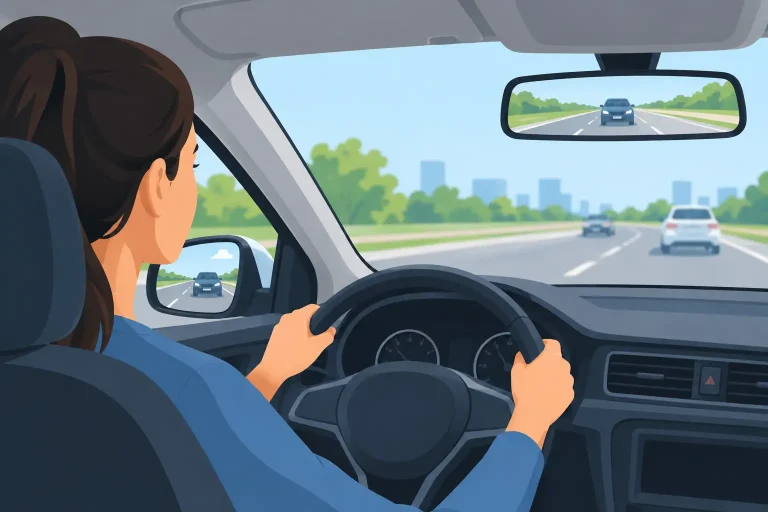
Mirrors are essential, but they are not enough on their own. Effective observation follows a routine while still allowing you to respond to what is happening.
Look well ahead down the road, then bring your attention back to the space in front of the car. Check your mirrors regularly so you know what is behind and beside you. Before moving off, changing lanes, turning or pulling over, use the correct mirror checks, indicate where required and perform a head check for blind spots.
A common learner mistake is staring at one point ahead. This can make hazards appear suddenly because the driver has missed the wider scene. Instead, scan in a relaxed pattern: distance, traffic ahead, side roads, footpaths, mirrors, then back ahead.
Your speed affects how far ahead you need to look. At higher speeds, especially on freeways and major arterial roads, look further ahead and increase your following distance. In slower suburban traffic, pay closer attention to driveways, crossings, parked vehicles and opening doors.
Watch the spaces where hazards appear
Certain areas deserve extra caution because they hide movement. Parked cars can conceal pedestrians and can open doors into your path. A large van or bus can block your view of a crossing. A line of stopped traffic may hide a vehicle turning across the road.
When visibility is reduced, reduce speed. This simple habit gives you more time to respond and helps other road users understand that you are approaching carefully. Never assume that because you cannot see a hazard, there is no hazard there.
Be particularly patient near schools, playgrounds, shopping strips and public transport stops. People may be distracted, carrying bags, stepping around a bus or moving unpredictably. Your responsibility is to leave enough space and be ready.
Manage speed and space before a problem develops
Speed limits are the maximum allowed in suitable conditions, not a target you must always reach. Rain, glare, heavy traffic, poor visibility, roadworks and unfamiliar roads can all require a lower speed.
Safe following distance is equally important. If the vehicle ahead brakes hard, you need room to slow smoothly without relying on the driver behind you to react perfectly. Leave extra space in wet weather, at night and when following larger vehicles that block your view ahead.
Try to avoid driving in another vehicle’s blind spot. If you cannot see the driver’s mirrors, there is a good chance they cannot see you clearly. Either safely move ahead or ease back to create a more visible position.
At intersections, do not enter on a green light without checking the path is clear. Another driver may be late through the intersection, a pedestrian may still be crossing, or traffic may be queued on the other side. A green light gives permission to proceed when safe, not permission to stop looking.
Wet weather, night driving and glare
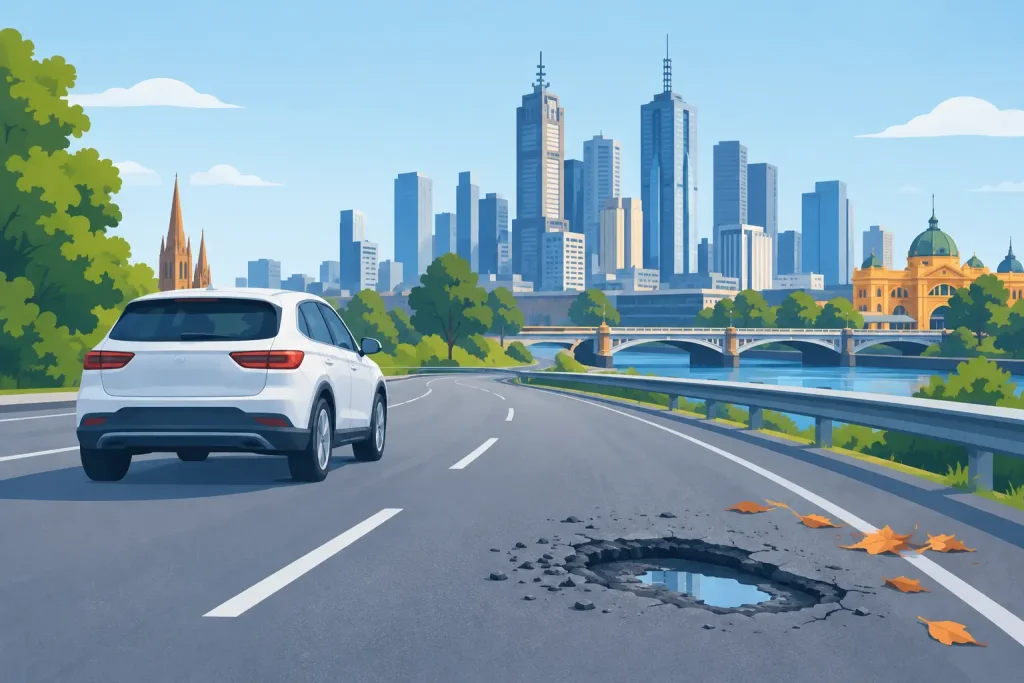
Melbourne weather can make familiar roads feel different within minutes. Rain reduces tyre grip and can make road markings, tram tracks and painted surfaces more slippery. Puddles may hide potholes, while spray from larger vehicles can reduce visibility.
In wet conditions, slow down smoothly, leave more space and avoid sudden steering or braking. Keep both hands in a secure position on the steering wheel and look where you want the car to travel. If your windows fog up, use the demister before visibility becomes a problem.
Night driving brings a different set of hazards. Pedestrians, cyclists and dark-coloured vehicles can be harder to see. Headlights from oncoming traffic may cause glare, especially after rain. Focus towards the left side of the road rather than looking directly into bright lights, while still monitoring the road ahead.
Fatigue is a hazard too. If you are tired, distracted, upset or under pressure to get somewhere, your observation and judgement can suffer. Safe driving sometimes means delaying a trip, taking a break or asking for help rather than pushing on.
Turn awareness into a driving habit
Hazard awareness improves through purposeful practice. During a lesson, narrating what you can see is a useful exercise: “Pedestrian near the crossing, car waiting to pull out, brake lights ahead, checking mirror.” You do not need to say it aloud forever, but it trains your eyes and mind to work together.
After each drive, think about one moment that felt uncertain. Did you see the hazard early? Did you leave enough room? Could a slower approach, earlier mirror check or better road position have made the situation easier? This reflection builds confidence without being hard on yourself.
A patient instructor can also help you practise these situations safely, from busy intersections and lane changes to roundabouts, school zones and test routes. At Victest Driving School, lessons focus on the decisions behind each manoeuvre, so learners build real confidence rather than simply memorising a route.
The safest drivers are not those who never meet hazards. They are the drivers who notice changing conditions early, stay calm and always leave themselves time and space to respond.