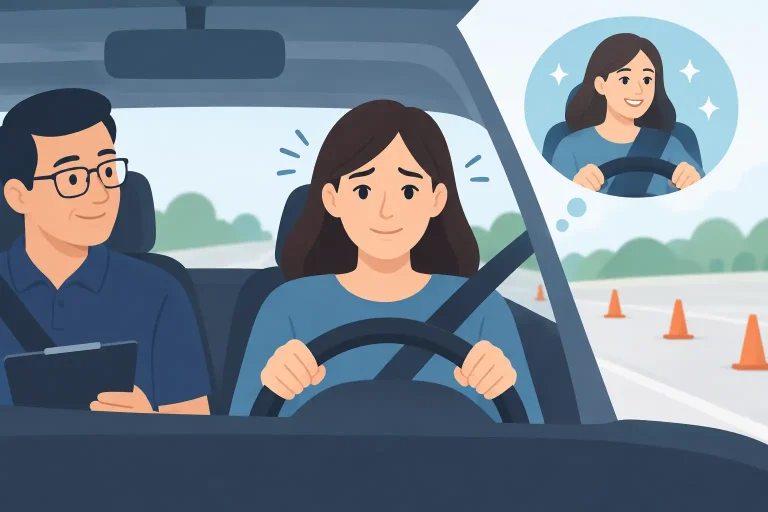

The moment an assessor asks you to turn left, merge, or complete a reverse parallel park, your preparation becomes visible. Strong test day preparation results are not just about knowing a few likely routes. They show up in calm observations, safe decisions, controlled steering and the ability to recover without panic when traffic does something unexpected.
For many learner drivers across Melbourne’s western suburbs, the practical test feels bigger than the drive itself. That is normal. The goal of proper preparation is not to make you memorise every street in Werribee, Tarneit or Hoppers Crossing. It is to help you drive safely and independently wherever the assessor takes you.
What Good Test Day Preparation Results Look Like
A good result is more than a pass mark. Passing is the outcome everyone wants, but the habits built before the test are what make that outcome more likely.
You should be able to begin the drive with a settled routine. That means adjusting the seat and mirrors, checking doors, knowing the controls and completing your observation checks before moving off. These early moments set the standard for the rest of the assessment.
During the drive, preparation should help you recognise developing situations rather than reacting late. You notice a pedestrian approaching a crossing, scan for vehicles before changing lanes, manage your speed before entering a busy shopping strip and leave enough space around parked cars. An assessor is looking for safe judgement, not perfection without thought.
A prepared learner also understands that a minor mistake does not have to end the test. If you choose the wrong lane but do so safely, stay calm. Continue only when it is safe and follow the next instruction. Trying to fix a mistake suddenly can create a much more serious issue.
Why a Lesson Before the Test Makes a Difference
A lesson immediately before your VicRoads test gives you time to settle into the car and switch your attention from daily life to driving. It is especially useful for nervous learners, adult beginners and international licence holders who may understand road rules but need more practice applying Victorian driving expectations in real traffic.
The right pre-test lesson is not a rushed attempt to teach everything. It is a focused check of the skills most likely to affect your assessment: observation, speed control, gap selection, lane position, turns, parking and responding to directions.
It also gives your instructor a chance to identify a last-minute habit that could cost you marks. Perhaps you are checking mirrors but not making your head movement clear enough. Maybe your braking is a little late at roundabouts, or you are drifting too close to parked vehicles. Small adjustments can make a meaningful difference when they are practised calmly before the assessment.
At Victest Driving School, test-day support is designed around this practical preparation. A lesson, mock assessment, pre-drive check and use of a familiar vehicle can remove unnecessary pressure, so you can concentrate on the road.
The Skills Assessors Notice First
Observation That Happens Early
Safe driving begins before the vehicle moves. Assessors will notice whether you scan intersections, check mirrors regularly and perform clear head checks before moving sideways, turning or entering traffic.
A quick glance after you have started changing lanes is too late. Build the habit of checking early, then checking again if the situation changes. This is particularly relevant on busy local roads where vehicles may enter from side streets, cyclists may be travelling near parked cars and traffic can stop unexpectedly.
Speed Control for the Conditions
Knowing the posted speed limit is only the starting point. Test-ready drivers choose a safe speed for visibility, traffic, rain, narrow streets and pedestrian activity. A 50 km/h road does not always mean 50 km/h is appropriate at every moment.
Driving too slowly without a reason can also cause problems. The aim is steady, appropriate progress. Keep up with the flow where it is safe, maintain a suitable following distance and avoid harsh braking by looking well ahead.
Positioning and Planning
Good lane position shows that you are aware of your surroundings. On wider roads, stay centred in your lane. On narrow residential streets, give parked vehicles enough clearance and watch for opening doors. Before an intersection or roundabout, choose your lane early and follow road markings.
If you are unsure which way the assessor wants you to go, safely ask them to repeat the instruction. Guessing at the last second can lead to an unsafe lane change or a rushed turn.
Practise the Test Conditions, Not Just the Route
Route familiarity can be helpful, particularly around the VicRoads testing area you have booked. You may become more comfortable with local roundabouts, school zones, busy intersections and common parking locations. But relying only on remembered turns is a weak strategy.
Assessors can use different roads, and real traffic changes every day. Roadworks, buses, rubbish trucks, pedestrians, rain and peak-hour congestion all affect the drive. The most useful mock test includes unfamiliar directions and realistic distractions, because it tests your decision-making rather than your memory.
Ask for feedback that is specific. “Be more confident” is not as useful as “start your mirror check earlier before moving around parked cars” or “slow down sooner when approaching the roundabout”. Clear feedback gives you one skill to practise at a time.
A Calm Plan for Test Morning
Test-day nerves often become worse when the morning feels rushed. Organise the practical details the night before: your booking details, required identification, glasses if you need them for driving and comfortable footwear. Choose shoes that let you feel the pedals properly. New, heavy or loose footwear can make smooth braking harder.
Give yourself enough time to arrive without rushing. A late arrival can put you under pressure before the assessment has begun. Eat something light, drink water and avoid filling your mind with advice from friends who may have completed their test years ago under different conditions.
Before starting, take a slow breath and return to your routine. Set up your seating position, check mirrors, confirm you understand the controls and focus on the next safe action. You do not need to predict the whole test. You only need to manage each situation as it arrives.
Common Preparation Mistakes to Avoid
Some learners spend every practice session on reverse parallel parking because it feels like the most obvious test skill. Parking matters, but it is only one part of safe driving. A test can be affected just as easily by missed head checks, poor speed management, late braking or not giving way correctly.
Another common mistake is trying to drive perfectly slowly. Hesitation can be appropriate when visibility is poor or traffic is complex, but excessive hesitation may confuse other road users. Build confidence in choosing safe gaps, moving off decisively and continuing at a suitable speed.
Finally, do not book your assessment based only on how you felt during one easy drive. Readiness is shown through consistency. If you can manage traffic, follow directions, correct small errors safely and keep your concentration over a full lesson, you are developing the independence the test is designed to assess.
When You Need More Than One Final Lesson
One focused lesson before the test may be enough for a learner who is already consistent and simply wants a refresher. Others benefit from several sessions, especially if they are returning to driving after a long break, converting an overseas licence or feeling anxious in heavier traffic.
There is no advantage in rushing because of a planned test date. If a mock test shows recurring safety issues, additional practice is usually the more affordable choice than sitting the test before you are ready. The right number of lessons depends on your current skill, how often you practise and whether you have safe access to a suitable supervising driver outside lessons.
Your driving test is a short assessment, but the confidence you build for it should travel with you long after you receive your licence. Arrive prepared, listen carefully, drive one situation at a time and let safe habits do the work.