
A quiet suburban street can feel very different when you are behind the wheel for the first time at 30, 45 or 60. You may understand the road rules, have watched others drive for years, and still feel unsure about judging a gap, reversing into a bay or managing busy traffic. So, do adults need driving lessons? Not every adult needs the same number of lessons, but professional instruction can make the learning process safer, calmer and far more efficient.
For adults in Melbourne’s western suburbs, lessons are particularly helpful when driving is tied to a practical goal: getting to work, taking children to school, gaining independence, or preparing for a VicRoads licence test. The aim should not simply be to pass a test. It is to build the judgement and habits that help you drive safely long after the test is over.
Do adults need driving lessons in Victoria?
There is no single answer because adults come to driving with different experience levels. An adult who has never driven needs a structured starting point. Someone who drove overseas for many years may need help understanding Victorian road rules, local traffic conditions and assessment expectations. A nervous driver who has had a long break may mainly need confidence and practice.
Driving lessons give you a qualified instructor beside you to explain each skill in real time. That is different from practising with a family member or friend. A supportive supervising driver can be valuable, but they may not know the current test standards, may pass on their own habits, or may become stressed when you make a mistake.
A professional instructor teaches you why a decision is safe, not just what to do. For example, checking mirrors before moving off is not a box to tick. It helps you identify cyclists, pedestrians, parked-car doors and vehicles approaching from behind before your car changes position.
When adult driving lessons make the biggest difference
Adult learners often feel pressure to learn quickly. They may be balancing work, family responsibilities and limited time. Clear instruction can prevent hours of unfocused practice and help you improve one skill at a time.
Lessons are especially worthwhile if you are an absolute beginner, have only driven occasionally, feel anxious in traffic, or are preparing to convert an overseas licence. They can also help if you have failed a practical test and are not sure what went wrong.
If you are starting from scratch
Beginning with the basics is not embarrassing. It is sensible. Your first lessons should cover seating position, steering control, braking smoothly, mirror use, signalling, speed management and safe observation. These foundations affect everything that comes later, including lane changes, roundabouts and parking.
An instructor can choose quieter local streets around areas such as Tarneit, Truganina, Werribee or Hoppers Crossing while you build control. As your confidence improves, lessons can progress to busier roads, multi-lane traffic, school zones and more demanding intersections.
If you are a nervous driver
Nerves are common among adult learners, particularly after a negative experience with a previous teacher, family member or test. The answer is not to throw you into difficult traffic before you are ready. It is to work at a pace that challenges you without overwhelming you.
A calm instructor can break a manoeuvre into manageable steps. Instead of being told to “just park”, you learn where to position the car, when to check mirrors and blind spots, how to control the speed, and how to correct safely if the first attempt is not right. Repetition turns an unfamiliar task into a routine.
If you hold an overseas licence
Experienced drivers from overseas are often capable behind the wheel, but experience does not automatically translate to Victorian driving conditions. Rules around school zones, tram stops, hook turns, giving way, lane discipline and speed limits may differ from the country where you learned.
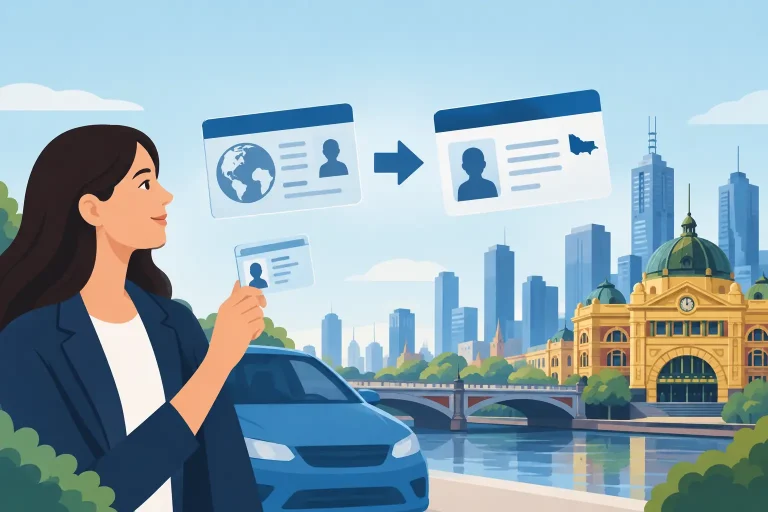
A lesson is a useful way to identify the adjustments you need to make before an assessment. It can also help you get comfortable with Melbourne traffic, local road layouts and the observation habits expected in a VicRoads practical test. Requirements can vary depending on your licence and circumstances, so check the current rules that apply to you.
What a good adult lesson should teach
A useful lesson is not simply a drive around the block. It should have a purpose, clear feedback and enough time for you to practise the skill yourself. The instructor should explain mistakes without making you feel rushed or judged.
For adult learners, the most valuable skills usually include controlled steering and braking, correct mirror and head checks, choosing safe gaps, maintaining an appropriate speed, changing lanes, entering and leaving roundabouts, and parking with awareness of other road users. You also need to learn how to recover when something does not go to plan.
That last point matters. Real driving is not perfect. A vehicle may stop suddenly, a pedestrian may step near a crossing, or you may miss a turn. Safe drivers stay composed, reassess and make the next safe decision. They do not panic, brake sharply without checking, or attempt a last-second manoeuvre.
Lessons versus practising with family or friends
Both can play a role. Professional lessons provide structured coaching, current road-rule knowledge and objective feedback. Private practice gives you extra time to reinforce what you have learned in a familiar vehicle and on routes you will use in daily life.
The strongest approach is often a combination of both. Use lessons to learn the correct technique and address areas that need improvement. Then, if you are on a learner permit and have an appropriate supervising driver, practise those same skills between lessons. This makes each paid lesson more productive.
The trade-off is that too much unstructured practice can reinforce poor habits. Rolling through stop signs, weak head checks, inconsistent speed control and late signalling may feel minor, but they create risk and can affect your test result. If private practice leaves you more confused or anxious, return to structured instruction before those habits become harder to change.
How many driving lessons does an adult need?
There is no honest fixed number. Your lesson needs depend on your previous experience, confidence, frequency of practice and the skills you need to develop. An adult with regular overseas driving experience may need a focused assessment and several targeted lessons. A complete beginner may need more time to develop safe control and decision-making.
It is better to measure progress by capability than by lesson count. Can you move off and stop smoothly? Do you check mirrors and blind spots without being prompted? Can you manage an unfamiliar intersection, respond to changing traffic and park safely? Are you making decisions independently?
Shorter lessons can suit a busy schedule or help nervous learners concentrate on one area. Longer sessions can be useful for combining skills, practising different road environments and completing a realistic mock test. A good instructor will recommend a lesson length that fits your stage of learning rather than pushing a one-size-fits-all package.
Preparing for the VicRoads driving test
Test preparation should sharpen your everyday driving, not teach you to memorise a route. Assessors can see whether you are observing properly, controlling the vehicle smoothly and responding safely to the road around you. They are looking for consistent judgement, not perfection.
A mock test can be valuable close to your assessment because it shows how you perform with instructions, time pressure and fewer prompts. It can reveal small but important issues, such as incomplete head checks, hesitation at roundabouts, incorrect road positioning or a rushed reverse park.
At Victest Driving School, adult learners can receive one-on-one instruction focused on the skills and local conditions that matter most, from early vehicle control through to practical test preparation. The right lesson plan should leave you clearer about what to practise next, not dependent on an instructor forever.
Give yourself permission to learn properly
Learning to drive as an adult is not a race, and it is not a measure of your intelligence or independence. It is a practical skill that improves through patient instruction, regular practice and honest feedback. Start with the skills you need today, practise them safely, and allow your confidence to grow one sound decision at a time.