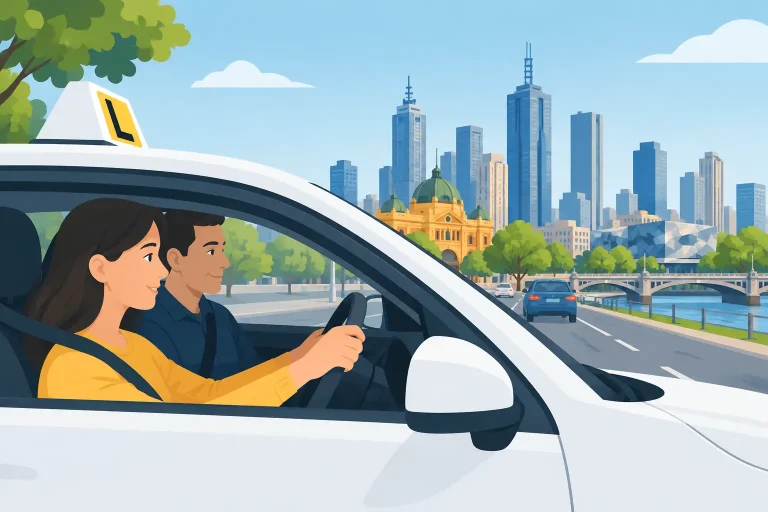
A missed mirror check can turn an otherwise solid drive into a risky decision in seconds. Whether you are preparing for your Ps test in Werribee, building confidence around Tarneit, or getting used to driving in Melbourne traffic, the best ways to practise mirrors are the ones that make checking them a calm, natural habit rather than something you remember at the last moment.
Mirrors are not just for the driving test. They tell you what is happening behind and beside your vehicle before you slow down, turn, move across, reverse or pull away. Good mirror use helps you anticipate cyclists, motorbikes, cars following too closely and traffic approaching in the next lane. The goal is not to stare at your mirrors. It is to take quick, useful glances while keeping most of your attention on the road ahead.
Set up your mirrors before every drive
Good mirror practice starts before the car moves. If your mirrors are poorly adjusted, you may check them often but still miss important information.
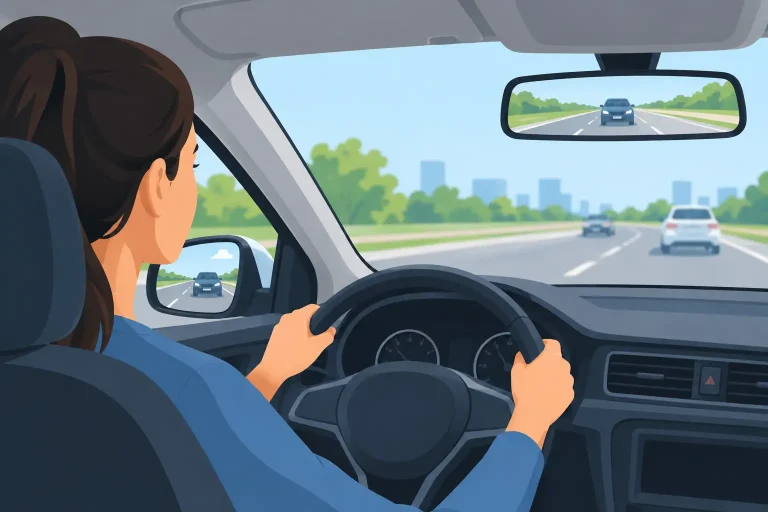
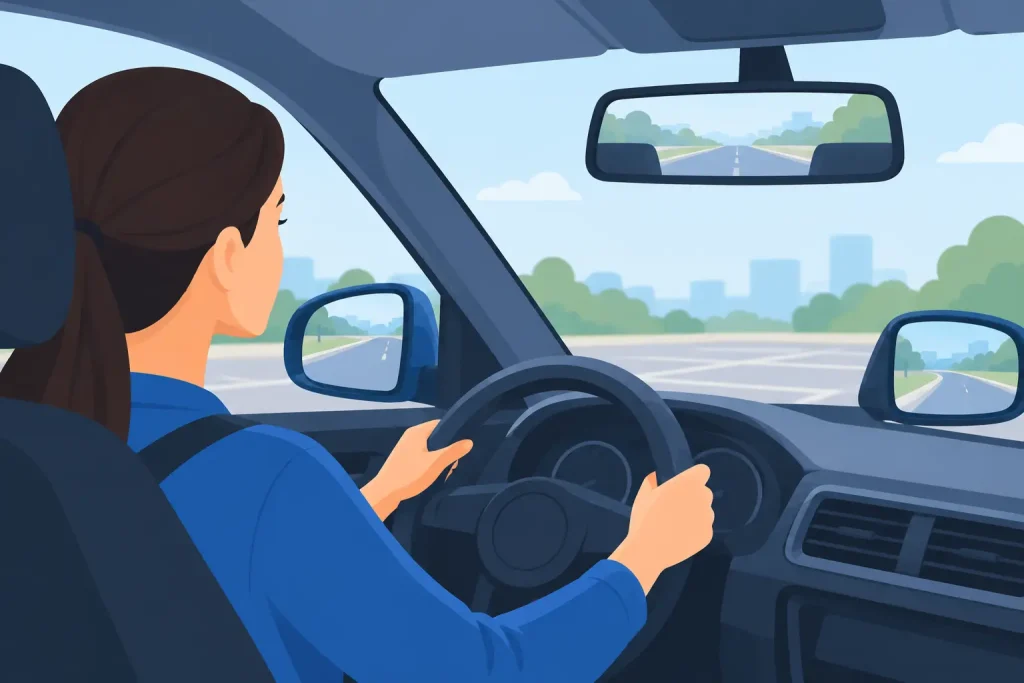
Set the interior mirror first. It should give you a clear view through the rear window without needing to move your head. Then adjust the side mirrors so you can see a small amount of your own car and as much of the lane beside you as possible. This gives you a useful reference point without wasting the view on the side of your vehicle.
Do this every time you get into a different car, including a family car or instructor vehicle. Seat position affects what you can see, so adjust your seat first, then the mirrors. During a practical driving test, taking a moment to set up properly also shows that you are preparing to drive responsibly.
Build a mirror routine that fits real driving
Learners often ask how often they should check mirrors. There is no useful rule such as checking every exact number of seconds. Instead, check them whenever the driving situation is about to change, as well as regularly while travelling along a road.
On a straight suburban street, take brief glances at your interior mirror and side mirrors to maintain awareness of traffic behind you. You might notice a vehicle closing the gap, a cyclist moving up the kerbside, or a driver beginning to overtake. These observations help you avoid being surprised later.
The most valuable checks happen before an action. Before braking, check the interior mirror. Before turning, look at the interior mirror and the relevant side mirror. Before changing lanes, check mirrors and perform a head check. Before moving off from the kerb, use mirrors, signal if required, and check over your shoulder for vehicles, cyclists and pedestrians.
Try saying the purpose of the check quietly while practising: “Rear traffic before braking” or “Left side clear before turning.” This can be helpful for nervous learners because it connects the glance to a decision. Once the habit becomes established, you will not need to say it aloud.
Keep each glance brief
A mirror check should normally be quick. Looking in a mirror for too long means you are not watching the road ahead, where traffic can stop unexpectedly or a pedestrian can step out from between parked cars.
Think of it as collecting information, then returning your eyes to the road. A calm scan is far better than repeated, long looks that make your steering wander. If you find yourself losing your lane position when checking mirrors, practise on quiet streets first with an experienced supervising driver or instructor beside you.
Practise mirrors before common driving actions
The easiest way to develop reliable mirror habits is to attach them to actions you perform on every lesson or supervised drive. Repetition in ordinary situations is more effective than trying to remember everything only during a mock test.
Approaching intersections and roundabouts
Before reducing speed for an intersection, check your interior mirror. This lets you see whether the vehicle behind is close, giving you a better sense of how smoothly and early to brake. If you are turning, check the appropriate side mirror before signalling and positioning for the turn.
At roundabouts, mirror use helps you manage your approach and exit, but it does not replace looking ahead for vehicles already in the roundabout, pedestrians at crossings, or cyclists near the left side of the road. Keep the priority clear: look where the immediate hazard is, then use your mirrors to maintain awareness around the car.
Changing lanes and merging
Lane changes are where learners must understand the difference between a mirror check and a head check. Mirrors show a large part of the lane beside you, but every vehicle has blind spots. A motorbike, cyclist or car may be beside you but not visible in the mirrors.
Use a planned sequence: check the interior mirror, check the side mirror in the direction you intend to move, signal for long enough to give others notice, then perform a quick head check before moving smoothly when it is safe. Keep your speed steady where possible and do not drift towards the lane line while you are checking.
On busy roads around Point Cook, Hoppers Crossing or Deer Park, you may need to wait for a safe gap rather than forcing your way in. Good mirror use gives you information, but patience is what prevents a rushed lane change.
Pulling over and moving off
When pulling over to the left, check the interior mirror and left mirror before signalling and moving towards the kerb. Pay close attention to cyclists, especially on wider roads or near bike lanes. Do not cut across someone travelling along the left side of your car.
When moving off again, do not rely on a quick mirror glance alone. Check mirrors, signal where needed, then look over your right shoulder to make sure the blind spot is clear. This is particularly important after parallel parking, when a vehicle or cyclist may be approaching from behind.
Reversing and parking
Mirrors are useful while parking, but they should support direct observation, not replace it. During reverse parallel parking, your side mirrors can help you judge your position relative to the kerb and parked cars. The interior mirror can help you stay aware of vehicles waiting behind.
However, look through the rear window in the direction you are reversing whenever practical, and continue scanning around the vehicle. Watch for pedestrians, children, shopping trolleys and people opening car doors. Reverse slowly enough that you can stop immediately if the space changes.
Make mirror checks visible but natural in your test
A driving test assessor needs to see that you are observing properly, but exaggerated head movements can become distracting and may take your focus away from the road. You do not need to perform for the assessor. You need clear, deliberate observations that match what you are doing.
Before a turn or lane change, make your mirror checks early enough to use the information. Checking a side mirror after you have already started drifting is too late. Similarly, checking the rear-view mirror only once you have braked hard does not show planning.
A useful practice exercise is to ask your supervising driver to occasionally question you after a mirror check: “What did you see behind us?” or “Was the left lane clear?” If you cannot answer, you may be moving your eyes without processing the information. The aim is awareness, not simply ticking off a movement.
Avoid the mirror mistakes that catch learners out
Many mirror errors come from anxiety rather than a lack of ability. A learner may focus intensely on the road ahead and forget what is behind them, or become so worried about checking mirrors that they look away from the road too often.
Watch for these common patterns during practice:
- Checking the mirrors only when prompted by an instructor or supervising driver.
- Looking in the mirror but failing to perform a head check before changing lanes or moving off.
- Braking sharply without first checking the interior mirror when there is time to do so.
- Using mirrors while reversing but forgetting to scan directly around the vehicle.
- Adjusting mirrors while the car is already moving.
If one of these habits sounds familiar, focus on one situation at a time for a few drives. For example, make every approach to a parked car an opportunity to check the interior mirror before easing off the accelerator or braking. Small, repeated improvements are how safe routines become automatic.
Use local practice drives to build confidence
Melbourne’s western suburbs offer plenty of useful mirror-practice situations: residential streets with parked cars, busy shopping areas, multi-lane roads, roundabouts and changing speed zones. Begin on quieter roads where you can practise the routine without feeling rushed. Then progress to busier routes once your checks are becoming consistent.
A qualified instructor can spot habits that are difficult to notice yourself, such as checking too late before slowing down or missing the left mirror when pulling in near the kerb. At Victest Driving School, lessons can be tailored around the situations that make you least comfortable, with calm feedback and repeated practice until your observations feel natural.
The best time to improve your mirror use is on your next ordinary drive, not the morning of your test. Set your mirrors, stay relaxed, and give every check a purpose. Each calm glance helps you make safer decisions for yourself and everyone sharing the road.