

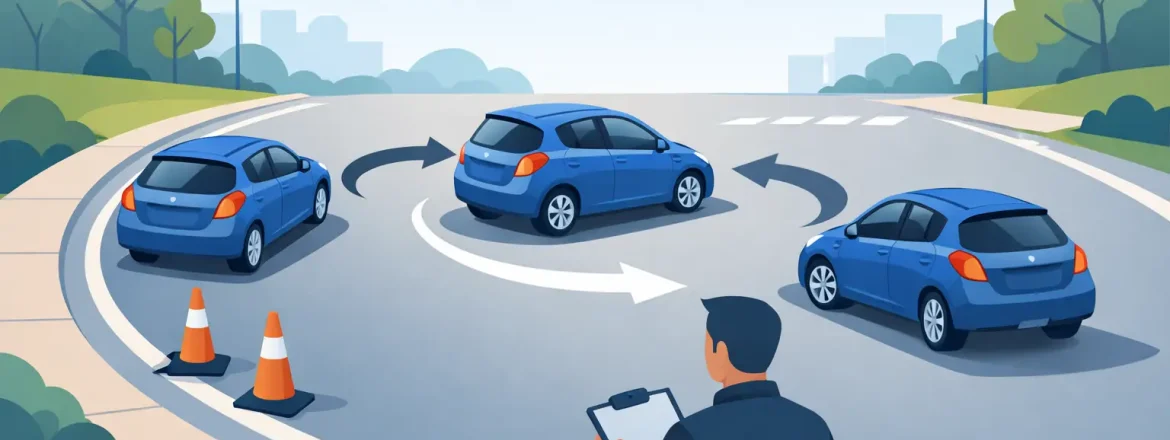
A three point turn can feel awkward when you are learning because it combines low-speed steering, reversing, signalling and constant observation in a small space. Once you understand how to do a three point turn in the correct order, it becomes a controlled manoeuvre rather than something to rush through. The goal is not to turn quickly. It is to turn around safely, smoothly and without affecting other road users.
For learner drivers in Melbourne’s western suburbs, this is also a useful real-world skill. Quiet residential streets around Tarneit, Truganina, Werribee and Hoppers Crossing can be suitable places to practise, provided the road is clear, wide enough and legal for a turnaround.
What is a three point turn?
A three point turn is a way of turning your vehicle around on a narrow road when you cannot safely make a U-turn in one movement. You move forward across the road, reverse back towards the original side, then drive forward in the new direction.
Despite the name, it may take slightly more than three movements if the road is especially narrow. That is not a problem. Safety and control matter more than completing it in exactly three moves. If you need an extra adjustment, keep your speed low, continue checking for hazards and make each movement deliberate.
Before attempting one, make sure a turnaround is allowed and sensible. Do not perform a three point turn near a crest, bend, railway crossing, busy intersection, pedestrian crossing, school crossing, or where your view is blocked. Avoid roads with heavy traffic, parked cars that leave little room, or signs that prohibit U-turns. If the situation does not feel safe, continue driving and find a better location.
How to do a three point turn step by step
1. Choose a safe, clear section of road
Look for a quiet street with enough width to turn without mounting the kerb or getting too close to parked vehicles. Check well ahead for approaching traffic, cyclists, pedestrians, children, driveways and vehicles that may reverse out.
Plan your manoeuvre before you stop. If cars are approaching or someone is waiting behind you, it is often better to keep moving and choose another location. A safe driver does not feel pressured into a difficult manoeuvre.
2. Pull over on the left and prepare
Move close to the left kerb in a legal, safe position. Keep the vehicle straight, select first gear in a manual or Drive in an automatic, and hold the brake as needed.
Check your interior mirror and left mirror as you pull in. When you are ready to move out, signal right. Check the interior mirror, right mirror and perform a right head check for bicycles, scooters or vehicles travelling beside you. Keep looking ahead as well.
3. Drive slowly towards the opposite side
When the road is clear, move forward slowly while steering right. Aim towards the far side of the road, but do not hit or climb the kerb. You want to use as much road width as safely possible, leaving room for the next reversing movement.
Use gentle accelerator control or let the car creep where appropriate. In a manual vehicle, clutch control is key. In an automatic, cover the brake and control the speed carefully. Looking through the turn towards where you want the vehicle to go will help your steering stay smooth.
As you near the opposite kerb, straighten the wheels if needed and stop with a safe gap. Do not rely on a last-second heavy brake application. A calm stop shows good judgement and vehicle control.
4. Reverse back towards the left side
Select reverse and signal left if appropriate for your intended movement. Before reversing, complete a full observation check. Look over your left shoulder through the rear window and check blind spots. Your main view while reversing should be through the rear window, not only in mirrors or on a reversing camera.
Reverse very slowly while steering left. This brings the rear of the vehicle back towards the left side of the road and positions the car to face the opposite direction. Keep scanning for pedestrians, cyclists, vehicles and anyone entering from a driveway.
If another road user approaches, stop safely and let them pass. Do not continue reversing simply because you have started the manoeuvre. Being patient is safer and gives you a better result in a driving assessment.
Stop before the rear tyre reaches the kerb. Leave enough room so you can move forward without scraping the gutter. If you misjudge the space, do not panic. Stop, assess the position and make a small correction only when it is safe.
5. Drive forward and finish facing the new direction
Select first gear or Drive. Signal right if required as you move away from the left side. Check your interior mirror, right mirror and right blind spot before moving forward.
Steer right and drive gently into the correct lane or road position for your new direction of travel. Straighten the wheels, cancel the indicator if necessary, build speed gradually and continue checking ahead.
You have completed the turn when the vehicle is travelling safely on the left side of the road in the opposite direction. Take a moment to settle the car and return to normal driving rather than accelerating sharply.
The observation checks assessors want to see
During a three point turn, observation is just as important as steering. In a Victorian driving test, an assessor needs to see that you are actively checking for hazards before and during every movement.
Use mirrors to understand what is behind and beside you, but do not depend on them alone. Head checks are essential before moving out from the kerb and before driving away after reversing. When reversing, turn your head and look through the rear window for most of the movement.
Keep in mind that hazards can appear halfway through the turn. A pedestrian may walk out from between parked cars, a cyclist may approach from behind, or a vehicle may enter the street. Continue observing throughout the manoeuvre rather than doing one quick check and assuming the road will stay clear.
Common three point turn mistakes
The most common error is beginning without enough space or visibility. Learners sometimes attempt the turn on a road that is too busy because they feel they need to act immediately. Waiting for a safe gap, or finding another street, is always the better decision.
Another frequent mistake is steering too late or too aggressively. This can leave the car too close to the kerb, force extra movements, or cause the wheels to mount the kerb. Move slowly enough that you have time to steer, observe and correct.
Some drivers also focus so heavily on the steering wheel that they forget their blind spots. Every change from forward to reverse, and reverse to forward, needs fresh observation. A reversing camera can support your view, but it cannot replace checking over your shoulder.
Finally, avoid rolling. Come to a complete stop before changing between Drive and Reverse, or selecting another gear in a manual. Rolling while selecting gears is unsafe and can be marked as poor control during an assessment.
Practise for confidence, not just the test
A three point turn is easier when you first practise in a quiet, familiar street with a supervising driver or qualified instructor. Start by learning the steering sequence at walking pace. Then focus on smoother braking, accurate road position and clear observation habits.
Every vehicle turns a little differently. A small hatchback may need less room than a larger SUV, and an automatic may creep more quickly than you expect. Practising in the car you will use for your test helps you understand its turning circle, brake response and reference points.
At Victest Driving School, learners are shown how to approach turnaround manoeuvres calmly, with feedback on observations, steering and road positioning. This is especially helpful for nervous drivers, adult beginners and overseas licence holders who are becoming familiar with Victorian road rules and left-side driving.
The best three point turn is usually quiet and unremarkable: you choose the right place, wait for a safe opportunity, move slowly and stay aware of everyone around you. Build that habit in practice, and the manoeuvre will feel far more manageable when it matters.