

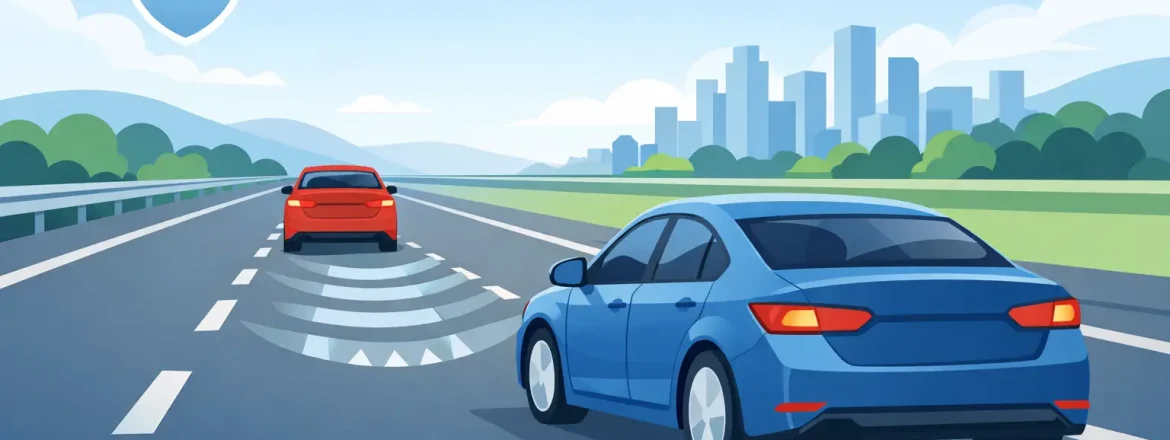
A car brakes sharply near the Werribee Plaza, traffic compresses on the Princes Freeway, or a vehicle suddenly turns into a driveway in Tarneit. These are the everyday moments when safe following distance driving makes the difference between a calm response and a crash. Keeping space in front of your car gives you time to see the hazard, decide what to do and brake smoothly instead of reacting in panic.
Why safe following distance driving matters
Following too closely is one of the most common habits learners need to correct. It can feel natural to stay close in slow traffic, especially when other drivers are changing lanes or when you are worried someone will move into the gap. But the space in front of your vehicle is not wasted road. It is your safety margin.
A proper gap gives you room to respond when the driver ahead brakes unexpectedly, slows for a roundabout, misses a turn or stops for a pedestrian. It also helps the driver behind you. When you brake gradually rather than suddenly, traffic flows more smoothly and there is less risk of a rear-end collision.
For learners preparing for a VicRoads driving test, following distance is also part of showing sound judgement. An assessor is looking for a driver who reads the road ahead, controls speed early and avoids creating unnecessary risk. Tailgating, late braking and repeatedly closing the gap can suggest that you are not planning far enough ahead.
Use the three-second rule in normal conditions
In dry conditions with clear visibility, use the three-second rule as your minimum following distance. Choose a fixed point ahead, such as a signpost, power pole or tree. When the rear of the vehicle in front passes that point, begin counting: “one thousand and one, one thousand and two, one thousand and three”.
If you reach the same point before you finish counting, you are too close. Ease off the accelerator gently and allow the gap to grow. There is no need to brake sharply unless the traffic situation requires it.
This method works because it adjusts with your speed. At 40 km/h, a three-second gap is shorter in metres than it is at 80 km/h, but it still provides a useful time buffer. Trying to judge a fixed number of car lengths is less reliable because vehicles and speeds vary.
The three-second rule is a starting point, not a universal answer. A learner driver, a nervous driver or someone driving an unfamiliar route may benefit from allowing a little more space even on a fine day. More room usually means more time to make a safe, unhurried decision.
When you need a longer gap
Road, weather and traffic conditions can change quickly across Melbourne’s western suburbs. A dry local street can become slippery after the first rain, and glare from a low afternoon sun can make it harder to see brake lights, pedestrians or road markings.
Increase your following distance to at least four seconds, and often more, when conditions reduce grip, visibility or your ability to react. This includes:
- Rain, wet roads, standing water or spray from larger vehicles
- Night driving, low sun, fog, dust or reduced visibility
- Busy freeway traffic, roadworks and unfamiliar roads
- Following trucks, buses, utes or vehicles that block your view ahead
Wet roads deserve particular care. Tyres need grip to slow the car, and braking distances can increase even before the road looks very wet. Leave the extra space early. Waiting until the vehicle ahead brakes hard is too late to create a safe buffer.
Large vehicles are another important case. If you are behind a truck or bus, you may not be able to see traffic lights, queues or hazards beyond it. Drop back far enough to improve your view around the vehicle where possible. Never sit close behind a large vehicle simply because you want to prevent another car entering the gap.
Keep the gap without losing your place in traffic
Many learners worry that leaving a safe gap invites other drivers to cut in. Sometimes it does happen, particularly in heavier traffic around Point Cook, Hoppers Crossing or freeway entry lanes. The safe response is not to speed up and close the space.
If another vehicle moves into your gap, ease off and rebuild it. They have not taken away your right to drive safely. Your job is to manage the space in front of you, not to compete for a position in the queue.
This approach also makes lane changes easier. Before moving lanes, check your mirrors and blind spot, choose a suitable gap and adjust speed gradually. Once you have changed lanes, re-establish a safe following distance rather than continuing close behind the next vehicle.
In slow, stop-start traffic, keep enough room to roll forward smoothly where practical. Constantly accelerating and braking is tiring, uses more fuel and increases the chance of a low-speed collision. Watch several vehicles ahead, not just the brake lights directly in front of you. If you see traffic slowing further ahead, release the accelerator early.
Safe following distance driving on your test
During a driving test, assessors do not expect you to drive overly slowly or leave a gap so large that you disrupt normal traffic. They want to see that you can match the conditions while keeping a sensible safety margin.
A good following distance supports several test skills at once. It gives you time for mirror checks, helps you approach intersections at a controlled speed and allows smoother braking. It is especially useful near school zones, shopping strips, roundabouts and railway crossings, where vehicles may stop with little warning.
Avoid staring at the rear of the car ahead. Keep your eyes moving between the road ahead, mirrors, signs and the broader traffic environment. If the vehicle in front suddenly brakes, looking further ahead may help you understand why and respond sooner.
For international licence holders, local traffic patterns can take time to feel familiar. Victorian roads often include busy roundabouts, tram-related traffic in some areas, school zones and frequent changes in speed limits. Giving yourself a larger gap while you build confidence is a practical, responsible adjustment.
Common habits that reduce your safety margin
The most obvious mistake is tailgating, but following distance can disappear in quieter ways. Some drivers maintain a good gap until they approach a red light, then accelerate late and brake hard. Others follow safely on straight roads but close in when going downhill, around bends or when approaching a turn.
Another common problem is relying on the brake pedal instead of managing speed early. If you are regularly braking hard behind traffic, ask yourself whether you could have noticed the situation sooner. Lifting off the accelerator earlier often creates a smoother, safer drive.
Distraction makes every gap less safe. Looking at a mobile, adjusting music, searching for an address or focusing on a conversation can use up the seconds you need to react. Set up navigation before moving off, keep your mobile out of reach and give the road your full attention.
Build the habit one drive at a time
Following distance is not just a rule to remember for a test. It is a driving habit that protects you, your passengers and everyone sharing the road. Practise the three-second count during ordinary lessons and supervised drives until it becomes automatic, then consciously extend the gap whenever rain, darkness, traffic or limited visibility calls for it.
At Victest Driving School, learners can practise this skill on local roads with calm, direct feedback on speed control, observation and braking. The goal is not to drive timidly. It is to create enough space to stay composed when the road gives you something unexpected.