

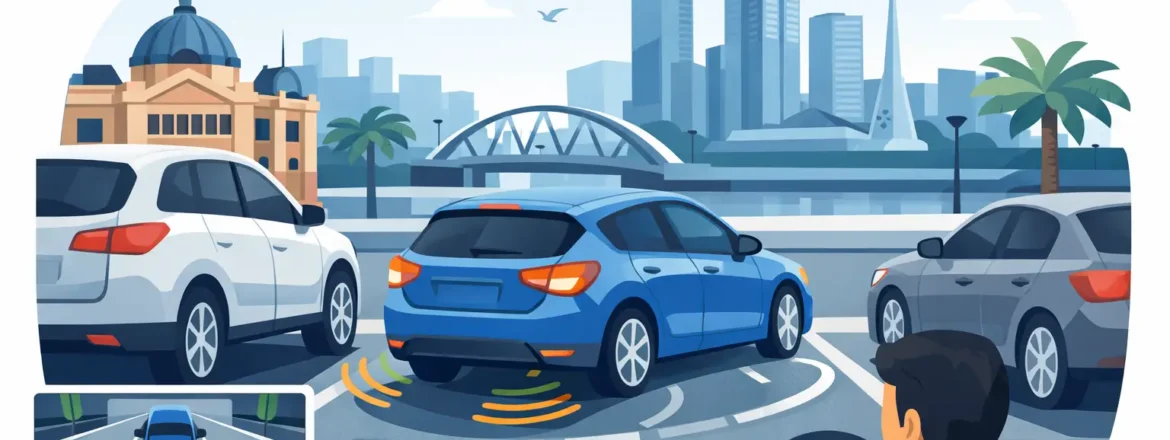
A reverse park can feel like the moment everyone is watching – even when the car park is almost empty. For many learners, the pressure comes from trying to steer, judge distance, check for people and vehicles, and remember the steps all at once. The good news is that learning how to reverse park confidently is not about finding one magic reference point. It is about using a safe routine, moving slowly, and practising until the sequence feels familiar.
In Melbourne’s western suburbs, you may need to reverse into a bay at a busy shopping centre, park near a school, or complete a reverse parallel park during a driving assessment. Each situation is slightly different, but the foundations are the same: preparation, observation, control and patience.
Why reverse parking feels difficult at first
When driving forwards, your view is naturally directed through the windscreen. In reverse, you need to gather information from your mirrors, rear window and blind spots while controlling the car at low speed. That can make a learner tense up, turn the steering wheel too quickly, or stop looking around them.
Nerves also encourage rushing. A learner may worry about holding up traffic, then start reversing before the car is properly positioned. But a safe driver does not let another driver’s impatience decide their actions. If needed, take a moment to reset, check your surroundings and complete the manoeuvre properly.
A reverse park is not judged by speed. It is judged by safety, control and final position.
How to reverse park confidently: start with a routine
A consistent routine gives you something reliable to follow when you feel nervous. Before moving, select reverse, keep your foot on the brake, and take a full look around. Check your mirrors, look through the rear window, and check blind spots for pedestrians, children, bikes, trolleys and approaching vehicles.
Your most important view when reversing is through the rear window, where practical. Mirrors help you judge the side of the vehicle and the parking space, but they do not replace direct observation. Continue scanning as you move. A person can step out from between parked cars in seconds.
Move at walking pace or slower. In most cars, gentle brake control is more useful than accelerator input when reversing. Slow speed gives you time to observe, make small steering adjustments and stop if the situation changes.
If you lose your position or are unsure where the car is heading, stop. Straighten the wheels if necessary, move forward to reset, then try again. Correcting safely is a sign of good judgement, not failure.
Reverse parking into a bay
Reverse bay parking is common in car parks around Werribee, Tarneit, Truganina and Point Cook. It can also be a practical choice because, once parked, you can drive forwards out of the space with a clearer view.
Start by choosing a space with enough room on both sides. Approach slowly and position your car so there is adequate space to swing the front of the vehicle out as you reverse in. The exact starting point depends on the size of your car, the width of the bays and the angle of the spaces, so avoid relying too heavily on a single marker you saw online.
After completing your observations, begin reversing slowly. Turn the steering wheel in the direction you want the rear of the car to travel. Use your side mirrors to monitor the bay lines and nearby vehicles, while continuing to look behind you. As the car enters the space, straighten the steering so the vehicle becomes parallel with the lines.
Aim to finish centred in the bay, with the car fully inside the marked area. Stop before reaching any kerb, wall or vehicle in front. Apply the parking brake and select park in an automatic, or neutral where appropriate in a manual vehicle.
Do not focus only on the line closest to you. Check both sides. A car can look straight in one mirror but still be too close to the other bay line.
Small corrections make a big difference
Many learners overcorrect because they make large, quick turns of the wheel. Instead, make a small adjustment, pause your steering movement, and see what the car does. At low speed, the vehicle will respond clearly without needing dramatic inputs.
If the car is crooked, it is usually easier to move forward slightly and reset than to keep twisting the steering wheel while reversing. Controlled corrections help protect your tyres, wheels and the vehicles parked beside you.
Reverse parallel parking safely
Reverse parallel parking requires a little more judgement because you are fitting into a space between vehicles. It is often assessed during a VicRoads practical driving test, so learners should be comfortable performing it on quiet residential streets before attempting it in heavier traffic.
First, identify a space that is realistically large enough. Position your car alongside the vehicle in front of the space, leaving a safe gap. Complete your observations carefully before reversing. This includes checking mirrors and blind spots, particularly for cyclists or vehicles that may pass on your right.
As you reverse, guide the rear of your car into the space with measured steering. Watch the position of your vehicle relative to the kerb and nearby cars. Once the front of your car has cleared the vehicle ahead, steer back the other way to bring the car parallel with the kerb.
Finish close enough to the kerb without touching it. If you end up too far out, do not panic. Provided it is safe, make a controlled correction. In a test, the assessor is looking for effective observation and control, not a perfect one-move park every time.
What assessors and experienced drivers notice
A tidy final position matters, but it is only one part of a safe reverse park. During a driving test, an assessor will also notice whether you keep an effective lookout, manage the vehicle smoothly and respond appropriately to other road users.
For example, if a pedestrian walks behind your car, stop and let them pass. Do not continue slowly in the hope they will move faster. If another vehicle is waiting, remain calm and complete the manoeuvre safely. You may need to pause, but you should not feel pressured into taking risks.
Common mistakes include reversing too quickly, looking only in mirrors, forgetting blind-spot checks, turning too early, and finishing with the car outside the bay or too far from the kerb. These problems are usually caused by rushing or practising without clear feedback, not by a lack of ability.
Practise where the pressure is low
Confidence grows through repeated, purposeful practice. Begin in an empty car park with clear bay lines and minimal traffic. Practise reversing straight first, then reverse into bays on both sides. Once you can do that calmly, try spaces with cars nearby and practise in different lighting and weather conditions.
For parallel parking, begin on a quiet street with generous spaces. Use cones or rubbish bins only if they can be placed safely and legally, well away from traffic. As your skill improves, practise in real spaces while ensuring you do not block driveways, intersections or pedestrian crossings.
It helps to practise in the same vehicle you will use for your test. Every car has different mirror positions, steering response, reversing camera displays and blind spots. Cameras and sensors are useful aids, but you must still look around the vehicle and remain responsible for what is behind you.
Build confidence with calm feedback
The fastest way to improve is not to repeat a mistake without knowing why it happened. After each attempt, ask yourself: Was my starting position right? Did I check properly before moving? Did I reverse slowly enough? Was my steering smooth? One small focus for the next attempt is more effective than trying to fix everything at once.
A qualified instructor can also help you find reference points that suit your height and the specific car you drive, then teach you when to move away from those references and rely on judgement. At Victest Driving School, lessons can be structured around reverse parking, local test conditions and the areas where you feel least certain.
Give yourself permission to take the manoeuvre slowly. With safe observation, gentle control and regular practice, reverse parking becomes less of a test of nerves and more of a normal part of driving independently.