

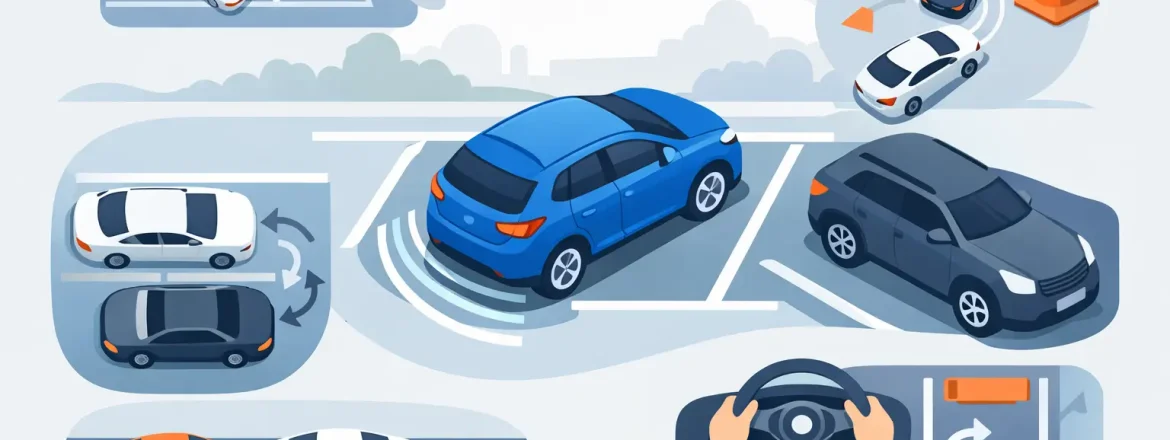
A quiet car park can feel more stressful than a busy main road when you are learning. There is less speed, but far more time to think about every mirror check, steering movement and car behind you. The top parking skills learners need are not about squeezing into a space as quickly as possible. They are about controlled observation, accurate judgement and staying calm when the manoeuvre does not go perfectly first time.
For learner drivers in Melbourne’s western suburbs, parking practice matters well beyond the VicRoads test. You will use these skills at shopping centres, school drop-off zones, stations, sports grounds and on residential streets in Tarneit, Truganina, Werribee and surrounding areas.
Why parking skills matter on the road and in the test
Parking is a low-speed task, but it demands several driving skills at once. You need to read the space, check for people and traffic, judge the size of your vehicle, control the brake and steering, and finish safely without rushing. A learner who can drive confidently in a straight line may still struggle with parking because the timing is different.
During a practical driving assessment, an examiner is looking for more than whether the car ends up in the right spot. They will notice your observations, road position, speed control and decision-making. A neat park is helpful, but safe checks and a controlled approach carry more value than trying to impress with speed.
The good news is that parking is highly teachable. It improves through a repeatable process, not guesswork. The more consistently you use the same safe routine, the less intimidating it becomes.
Top parking skills learners need before test day
1. Set up before you move
Good parking starts before the car rolls. Slow down early, check your mirrors and look for pedestrians, cyclists, moving vehicles and shopping trolleys. Use your indicator where appropriate so other road users understand what you intend to do.
Before reversing, make sure you know where the rear of your car is heading. Adjust your seating position so you can reach the pedals comfortably and see through the rear window. Your mirrors support your view, but they do not replace looking over your shoulder. Blind spots matter at parking speed too, especially near footpaths and busy car parks.
A common learner mistake is stopping too close to the space or turning too early. Taking a moment to position the car properly gives you room to steer and reduces the need for large corrections later.
2. Control the car slowly and smoothly
Parking is won with patience. Use gentle braking and, when appropriate, controlled accelerator input rather than letting the vehicle roll too quickly. In an automatic, learners often find it helpful to understand how the car creeps in reverse. In a manual, careful clutch control is just as important.
Keep both hands in a secure steering position and turn the wheel steadily. Avoid spinning the steering wheel wildly or making sudden changes because you feel under pressure. Small, deliberate adjustments are easier to understand and safer for anyone nearby.
If the car is not going where you expected, stop. Recheck your surroundings, straighten up if needed and try again. There is no prize for completing a park in one movement. A safe correction shows sound judgement.
3. Build a reliable reverse parallel parking routine
Reverse parallel parking can worry learners because it combines reversing, steering and judging the kerb. It becomes simpler when you break it into stages: choose a realistic space, line up correctly beside the vehicle in front, reverse slowly while observing, steer into the space, then straighten the vehicle and finish close to the kerb without touching it.
The exact reference points will vary between cars. A small hatchback and a larger SUV do not turn or sit in the same position, so copying someone else’s marker may not work. Learn the reference points that suit the vehicle you will drive in your test, but understand why each steering movement is made.
Keep checking all around as you reverse. Looking over your left shoulder through the rear window gives you a clear view of your direction of travel, while mirrors help you monitor kerb distance and nearby vehicles. If another road user approaches, be prepared to pause. Staying aware matters more than following a memorised sequence.
When you have finished, check that your tyres are close to the kerb, the vehicle is within the space, and you have not blocked a driveway. Leave enough room for vehicles in front and behind to move safely.
4. Park accurately in angled and perpendicular bays
Shopping-centre parking bays appear easier because the lines are visible, but they create different risks. Pedestrians may step out from between vehicles, reversing cars can appear suddenly, and larger vehicles can block your view.
For a forward park, approach slowly and give yourself enough room to turn. Aim to enter in a smooth arc rather than cutting sharply across the line. Use the bay markings to check that your car is centred, then stop before the front of the vehicle reaches a kerb, bollard or another car.
Reversing into a bay can take more practice, but it gives you a clearer view when leaving. This is often a smart choice in busy car parks, provided you complete full observations before reversing. It depends on the space, traffic flow and how much room you have. Do not reverse into a bay simply because it feels more advanced. Choose the safest option for the situation.
5. Judge space, kerbs and vehicle position
Accurate parking relies on spatial awareness. Learners need to understand where the front bumper, rear bumper and wheels sit in relation to lines, kerbs and other vehicles. This awareness develops with practice in the same car, not by staring at one mirror.
Use your mirrors to assess side clearance, but avoid relying on them alone. Look ahead, look behind and scan both sides before and during the manoeuvre. In a tight kerbside space, you should be close enough to park legally and safely, without mounting the kerb or scraping a wheel.
If you are unsure whether a space is large enough, it is usually better to keep going and find another one. Forcing a vehicle into a space creates stress and raises the risk of a minor collision. Safe drivers know when not to attempt a manoeuvre.
6. Keep observing while the car is moving
One of the most valuable parking habits is continuing to observe, even after you have chosen your space. Learners sometimes focus so heavily on the line or kerb that they stop checking for hazards. A child can run through a car park, a door can open, or another driver can reverse without seeing you.
Use a clear observation routine: mirrors before slowing, mirrors and blind-spot checks before changing position, then regular all-round checks while reversing. Move slowly enough that you can stop if the situation changes. At low speed, you have time to make safer decisions. Use it.
Practise parking in realistic local situations
Empty car parks are useful at the beginning because they let you learn steering and vehicle position without pressure. But confidence grows when practice becomes more realistic. Once you have the basics, practise near quieter residential streets, different shopping-centre layouts and legal kerbside spaces with your supervising driver or instructor.
Vary the conditions gradually. Practise in daylight first, then in light rain or at dusk when you are ready. Try parking with cars on both sides, but do not begin in the tightest possible space. Each successful repetition should challenge you slightly without making you panic.
It also helps to practise leaving a park. Before pulling out, check mirrors, blind spots and approaching traffic, then move only when it is safe. Many learners focus on getting into the space and forget that exiting safely requires the same level of care.
Turn parking feedback into real confidence
A driving lesson can identify the small habits that are holding you back: turning too early, looking down at the kerb, braking too late or losing track of other road users. With one-on-one instruction, these issues can be corrected before they become permanent habits. Victest Driving School focuses on calm, structured practice so learners can understand the reason behind each step, not just memorise a routine for test day.
Do not wait until the week before your test to start practising parking. Build it into regular driving sessions, ask for clear feedback and allow yourself to make safe corrections. The goal is not a perfect park every time. It is becoming the driver who notices, slows down, adjusts and finishes safely wherever the next parking space happens to be.